Topic: Incident of Ifk (Event of the False Accusation) | Surah An-Nur (Chapter 24)
Quick Summary
In the 5th or 6th year of Hijra, a group of hypocrites in Madinah spread a terrible false rumor about Aisha (RA), the beloved wife of Prophet Muhammad (peace be upon him). This incident, known as the “Incident of Ifk” (the Great Lie), tested the entire Muslim community for about one month. It caused deep pain to the Prophet (PBUH), Aisha (RA), and her family. At the end, Allah Himself revealed ten verses of Surah An-Nur (Chapter 24 of the Quran) to declare Aisha’s (RA) complete innocence. This blog covers the full event from beginning to end, including every authentic reference, historical source, and the Islamic ruling that came out of it.
1. Who Was Aisha (RA)? A Brief Introduction
Aisha bint Abi Bakr (RA) was the daughter of Abu Bakr As-Siddiq (RA), the closest companion of Prophet Muhammad (PBUH). She became one of the most important figures in Islamic history not only as a wife of the Prophet (PBUH) but also as one of the greatest scholars of Islam. She narrated over 2,000 hadiths and taught thousands of companions and students. Her full name was Aisha bint Abi Bakr As-Siddiq, and she was given the title “Umm al-Muminin” (Mother of the Believers) by Allah in the Quran (Surah Al-Ahzab 33:6).
The Prophet (PBUH) himself said about her: “Take half of your religion from this red-cheeked woman (Aisha).” Her position in Islam is that of one of the most trusted and credible narrators of the Sunnah.
References for This Section:
Sahih Al-Bukhari, Book 62 (Virtues of the Companions), Hadith 3662 – on Abu Bakr being the Prophet’s closest companion. Sahih Al-Bukhari, Book 3 (Knowledge), Hadith 100 – on learning religion from Aisha (RA). Quran, Surah Al-Ahzab 33:6 – title ‘Mother of the Believers’. Ibn Hajar Al-Asqalani, Al-Isabah fi Tamyeez As-Sahaba, Vol. 4, p. 359 – biography of Aisha (RA). Ibn Sa’d, At-Tabaqat Al-Kubra, Vol. 8, p. 66 – on Aisha’s scholarship and number of hadiths.
2. Background: The Expedition of Banu Mustaliq
The incident of Ifk took place during or after the Ghazwa (battle/expedition) of Banu Mustaliq. According to the majority of scholars, this expedition happened in the 5th year of Hijra (though some scholars like Ibn Ishaq and Al-Waqidi place it in the 6th year). The Banu Mustaliq tribe had been secretly planning to attack the Muslims of Madinah. When the Prophet (PBUH) received this news, he led an army to deal with them. The Muslims were victorious.
During this expedition, it was the custom of the Prophet (PBUH) that whenever he traveled, he would draw lots among his wives to decide who would accompany him. On this particular occasion, the lot fell to Aisha (RA), and she traveled with the army inside a covered howdah (a curtained seat/litter placed on the back of a camel). Because women were modest and light in those days due to eating little, the carriers could not tell whether someone was inside the howdah or not just from its weight.
References for This Section:
Sahih Al-Bukhari, Book 64 (Expeditions), Hadith 4141 – full account narrated by Aisha (RA) herself. Sahih Muslim, Book 37 (Repentance), Hadith 2770 – same narration with additional details. Ibn Hisham, As-Seerah An-Nabawiyyah, Vol. 3, p. 302 (edited from Ibn Ishaq’s original work) – background on the expedition. Ibn Kathir, Al-Bidayah Wan-Nihayah, Vol. 4, p. 156 – date and context of the expedition. Al-Waqidi, Kitab Al-Maghazi, Vol. 1, p. 406 – details on the Banu Mustaliq campaign.
3. The Necklace Goes Missing: How It All Began
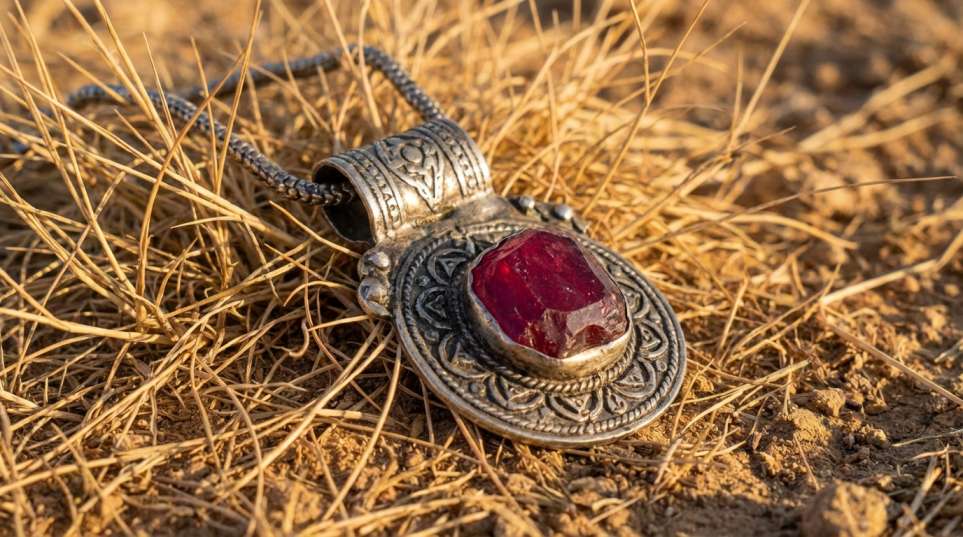
This is where the story truly starts. On the return journey from the expedition, the army stopped at a resting place. Aisha (RA) stepped away from the camp to answer the call of nature. When she returned, she realized that the necklace she was wearing (it was a necklace borrowed from her sister Asma, according to some narrations) had broken and fallen somewhere.
She went back to look for it. By the time she returned to where the howdah had been, the entire army had already packed up and left. The people responsible for loading the howdah onto the camel assumed she was inside, because she was very light. They loaded the empty howdah and moved on.
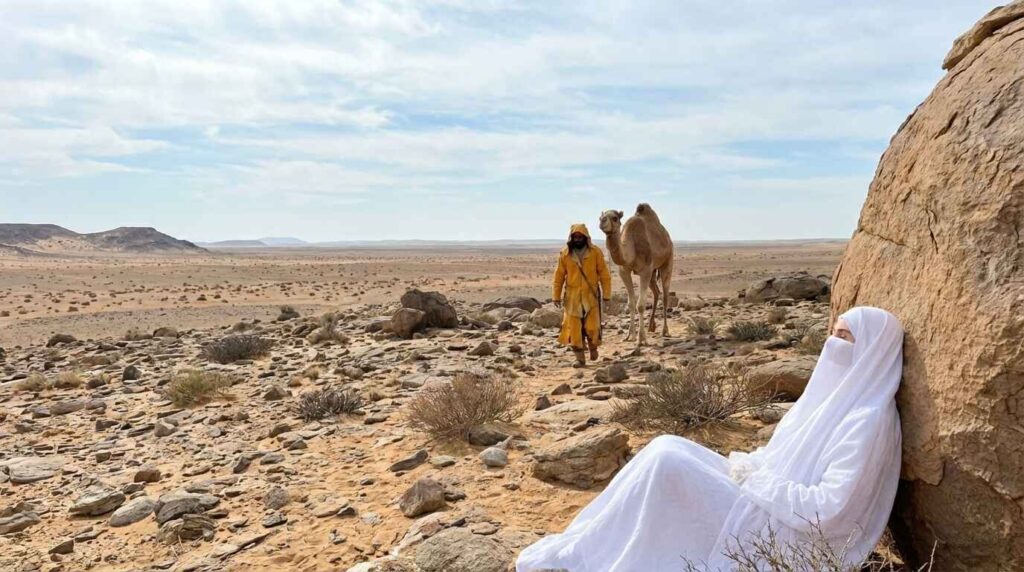
Aisha (RA) sat down at the spot, covered herself in her outer cloak (jilbab), and waited, trusting that someone would come back for her when they noticed she was missing. She fell asleep out of exhaustion.
Early in the morning, Safwan ibn Al-Mu’attal As-Sulami Al-Dhakwani (RA) passed by that spot. His assigned duty was to follow behind the army and collect anything left behind. He saw a person sleeping. When he came closer, he recognized Aisha (RA) because he had seen her before the verse of hijab was revealed. He said nothing except the words “Inna lillahi wa inna ilayhi raji’un” (We belong to Allah and to Him we shall return). Aisha (RA) woke up, covered her face, and he brought his camel forward without speaking a word. She mounted the camel and he led it by the rope until they caught up with the army at noon.
References for This Section:
Sahih Al-Bukhari, Book 64 (Expeditions), Hadith 4141 – full primary narration of Aisha (RA) in her own words. Sahih Muslim, Book 37 (Repentance), Hadith 2770 – parallel narration. Ibn Kathir, Tafsir Al-Quran Al-Azeem, Vol. 6, p. 2 (under Surah An-Nur) – detailed commentary. Al-Nawawi, Sharh Sahih Muslim, Vol. 17, p. 113 – commentary and explanation of events. Ibn Hajar Al-Asqalani, Fath Al-Bari (Sharh Sahih Al-Bukhari), Vol. 8, p. 457 – detailed analysis.
4. The Hypocrite Who Started the Rumor: Abdullah ibn Ubayy
When Safwan arrived with Aisha (RA), the chief hypocrite of Madinah, Abdullah ibn Ubayy ibn Salul, saw them. He is described in many historical sources as the leader of the munafiqeen (hypocrites) in Madinah. Before the arrival of Prophet Muhammad (PBUH) in Madinah, Abdullah ibn Ubayy had been expected to become the king of Madinah. The arrival of the Prophet (PBUH) ended those ambitions, and he secretly became an enemy of Islam while pretending to be a Muslim.
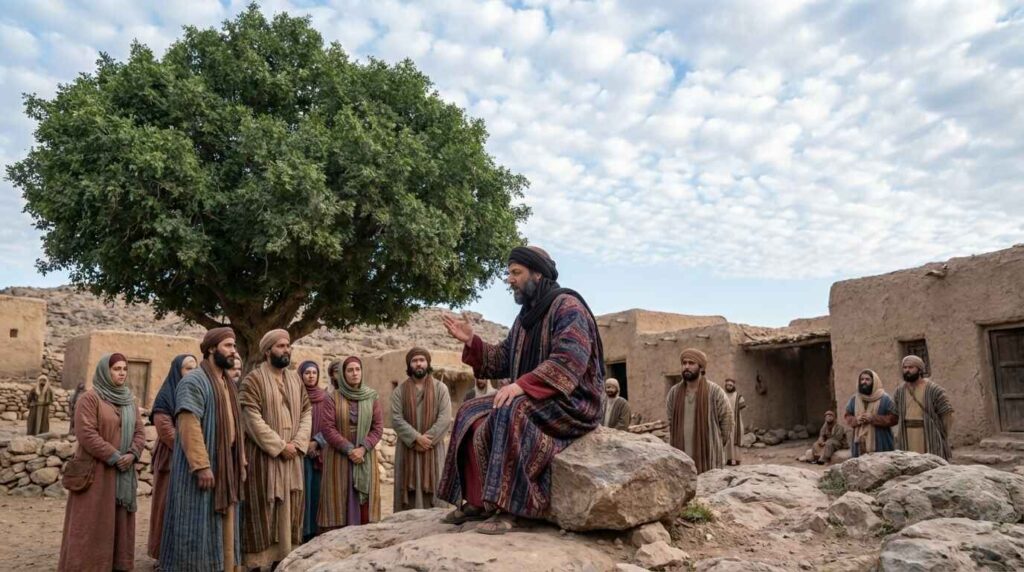
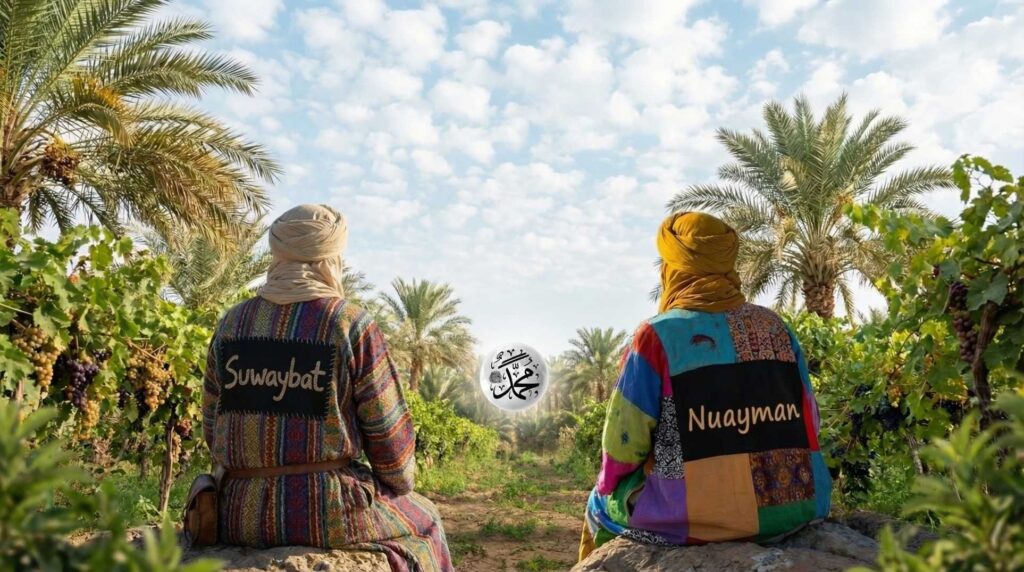
He was the one who made the false accusation openly and loudly. He said something deeply inappropriate about Aisha (RA) and Safwan (RA), claiming there was something improper between them. Some other people in Madinah, including individuals who were not hypocrites but who made a serious mistake, also began repeating this rumor. Among them were Hassan ibn Thabit (the poet of the Prophet), Mistah ibn Uthatha (whose mother was a cousin of Abu Bakr), and Hamnah bint Jahsh (the sister of Zaynab bint Jahsh, who was a wife of the Prophet).
This rumor spread like fire throughout Madinah. It was a time of great trial. The close companions of the Prophet (PBUH) were divided in their reactions. Some refused to believe it. Others, unfortunately, let doubt enter their hearts.
References for This Section:
Sahih Al-Bukhari, Book 64 (Expeditions), Hadith 4141 – Aisha (RA) herself identifies the people involved. Sahih Muslim, Book 37 (Repentance), Hadith 2770 – full chain of events. Ibn Hisham, As-Seerah An-Nabawiyyah, Vol. 3, p. 308 – identifies Abdullah ibn Ubayy as the main instigator. Ibn Kathir, Al-Bidayah Wan-Nihayah, Vol. 4, p. 159 – describes Abdullah ibn Ubayy’s character and role. Ibn Sa’d, At-Tabaqat Al-Kubra, Vol. 8, p. 69 – additional background.
5. One Month of Pain: What the Prophet (PBUH) Went Through
For approximately one month, the Prophet Muhammad (PBUH) went through one of the most difficult emotional periods of his life. He was a husband who deeply loved his wife and who knew in his heart she was innocent. But as the Prophet and ruler of the Muslim community, he could not make a public judgment without revelation from Allah. Wahi (divine revelation) had stopped coming on this matter.
During this period, the Prophet (PBUH) consulted some of his closest companions. He asked Ali ibn Abi Talib (RA) and Usama ibn Zayd (RA) for their opinions. Usama ibn Zayd spoke well of Aisha (RA) and said he knew only good about her. Ali ibn Abi Talib (RA), while not accusing Aisha (RA), suggested that the Prophet (PBUH) could ask Aisha’s maidservant Barirah for information, as she might know something from living in the house. Barirah stated clearly that she had never seen anything wrong in Aisha’s behavior.
The Prophet (PBUH) also addressed the people from the pulpit (minbar), and his behavior toward Aisha (RA) became more distant than usual during this period, which caused her great pain. Aisha (RA) herself narrated that she wept so much during those days that she felt her liver would burst from crying.
Aisha’s parents, Abu Bakr (RA) and Umm Ruman (RA), were also in tremendous distress. When Aisha finally asked her mother what people were saying, her mother tried to minimize it and told her not to worry. But Aisha (RA) knew something was deeply wrong.
References for This Section:
Sahih Al-Bukhari, Book 64 (Expeditions), Hadith 4141 – Aisha’s complete first-person account. Sahih Muslim, Book 37 (Repentance), Hadith 2770 – detailed account of the Prophet’s behavior during this period. Ibn Kathir, Tafsir Al-Quran Al-Azeem, Vol. 6, p. 5 – commentary on the Prophet’s consultation with Ali and Usama. Ibn Hajar Al-Asqalani, Fath Al-Bari, Vol. 8, p. 460 – detailed explanation of Ali’s (RA) advice and its context. Al-Nawawi, Sharh Sahih Muslim, Vol. 17, p. 117 – analysis of the events during this month.
6. The Moment of Truth: Aisha’s Powerful Words
After one month, the Prophet (PBUH) came to Aisha’s (RA) house where she was staying with her parents. He sat down and after praising Allah said: “O Aisha, I have been told such-and-such about you. If you are innocent, Allah will reveal your innocence. And if you have committed a sin, then seek forgiveness from Allah and repent to Him, for when a servant confesses a sin and repents, Allah forgives.”
Aisha (RA) narrated that at that moment, her tears stopped. She turned to her father Abu Bakr (RA) and said, “Reply on my behalf.” He said, “I do not know what to say.” She turned to her mother, who said the same. So Aisha (RA) spoke for herself. She said:
“By Allah, I know that you have heard this thing so much that it has settled in your hearts and you believe it. If I say I am innocent, you will not believe me. And if I confess to something I never did, you will believe me. So I will only say what the father of Yusuf said: ‘So patience is most fitting, and Allah is the One Whose help can be sought against what you describe.’ (Quran, Surah Yusuf 12:18)”
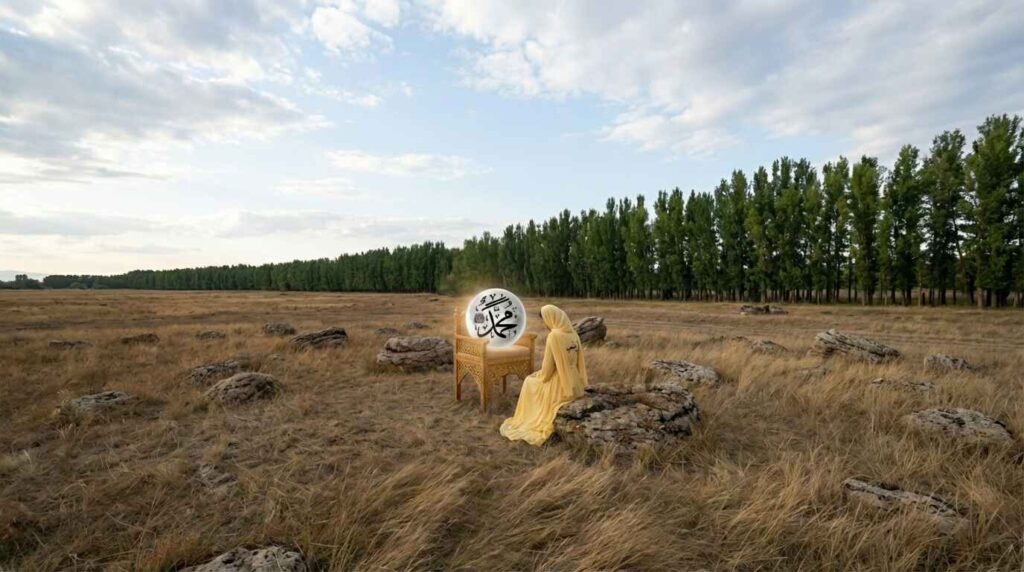
Then Aisha (RA) lay down on her bed. And in that very moment, Wahi began to descend upon the Prophet (PBUH). He was in a state of revelation, sweating, even on a cold day. When it ended, he was smiling. He said: “O Aisha, glad tidings! Allah has revealed your innocence.”
References for This Section:
Sahih Al-Bukhari, Book 64 (Expeditions), Hadith 4141 – Aisha’s own direct narration of this exact moment. Sahih Muslim, Book 37 (Repentance), Hadith 2770 – confirming account. Ibn Kathir, Tafsir Al-Quran Al-Azeem, Vol. 6, p. 7 – full commentary. Quran, Surah Yusuf 12:18 – the verse Aisha quoted at this moment. Al-Qurtubi, Al-Jami li-Ahkam Al-Quran, Vol. 12, p. 200 – tafsir and legal analysis.
7. The Divine Verdict: Surah An-Nur (Chapter 24), Verses 11 to 20
Allah revealed ten consecutive verses (Surah An-Nur 24:11-20) to declare Aisha’s complete innocence and to address the entire Muslim community’s response to the false accusation. These are among the most powerful verses in the entire Quran because they come as a direct defense of an innocent woman from Allah Himself.
The key points from these ten verses are:
First, Allah says in verse 11 that those who brought this accusation (ifk) are a group from among you (the Muslims). He warns that this was not something harmful for the Prophet or Aisha but rather a test, and that the person who took the greatest part in it will face a great punishment.
Second, in verse 12, Allah asks: Why, when you heard it, did the believing men and women not think well of their own people and say, ‘This is an obvious lie?’ This verse teaches an eternal lesson in Islam: when an accusation is made against a person of known good character, the default reaction of a Muslim should be to assume innocence.
Third, in verse 13, Allah says: Why did they not bring four witnesses? And since they did not bring witnesses, they are liars in the sight of Allah.
Fourth, in verse 16, Allah says: Why, when you heard it, did you not say, ‘It is not right for us to speak of this. Glory be to You (O Allah), this is a great slander.’ This establishes that repeating a baseless rumor is itself a sin in Islam.
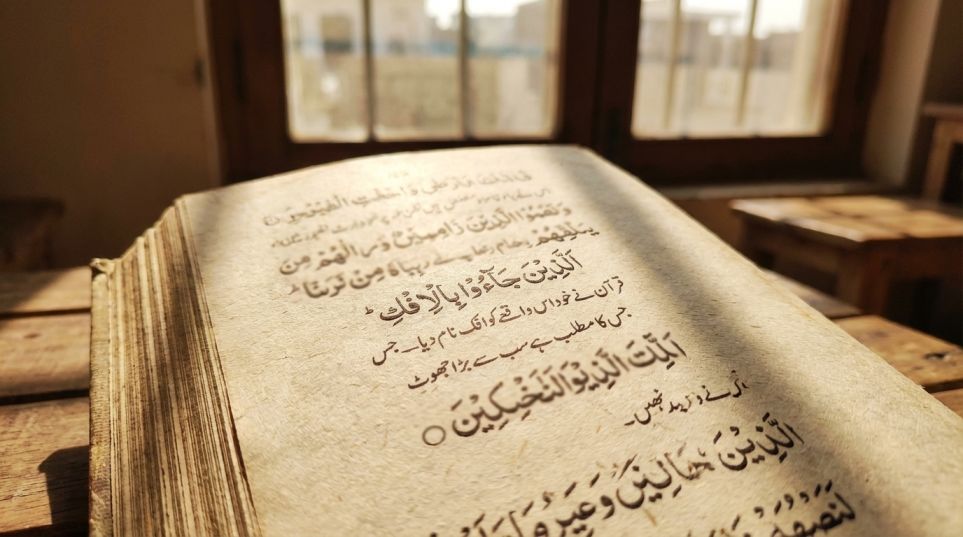
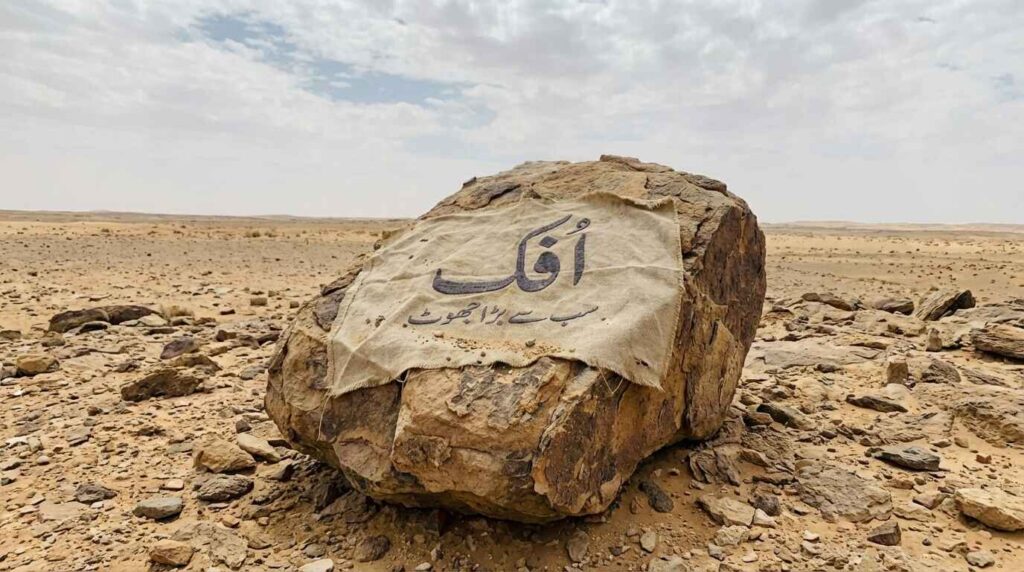
Fifth, Allah uses the word ‘Ifk’ in verse 11, which means ‘the greatest inversion of truth’ or ‘the most extreme form of lie.’ This is the Quran’s own label for this event, which is why Islamic scholars call this entire event “Hadith Al-Ifk” (the Narrative of the Great Lie).
References for This Section:
Quran, Surah An-Nur 24:11-20 – the ten revealed verses. Ibn Kathir, Tafsir Al-Quran Al-Azeem, Vol. 6, pp. 1-20 – the most detailed classical tafsir of these verses. Al-Tabari, Jami Al-Bayan fi Ta’wil Al-Quran, Vol. 18, pp. 85-120 – oldest surviving major tafsir, written by Imam Al-Tabari (d. 310 AH). Al-Qurtubi, Al-Jami li-Ahkam Al-Quran, Vol. 12, pp. 195-220 – legal rulings derived from these verses. Al-Razi, Mafatih Al-Ghayb (Tafsir Al-Kabir), Vol. 23, pp. 160-185 – theological and linguistic analysis.
8. The Law of Qazf: What Islam Says About False Accusations
One of the most important outcomes of this incident is the revelation of the Islamic law of Qazf (false accusation of adultery). This law is found in Surah An-Nur 24:4, which was revealed as part of the same set of revelations connected to this incident.
Allah says in Surah An-Nur 24:4:
“And those who accuse chaste women and then do not produce four witnesses, lash them with eighty lashes and do not accept from them testimony ever after. And those are the defiantly disobedient.”
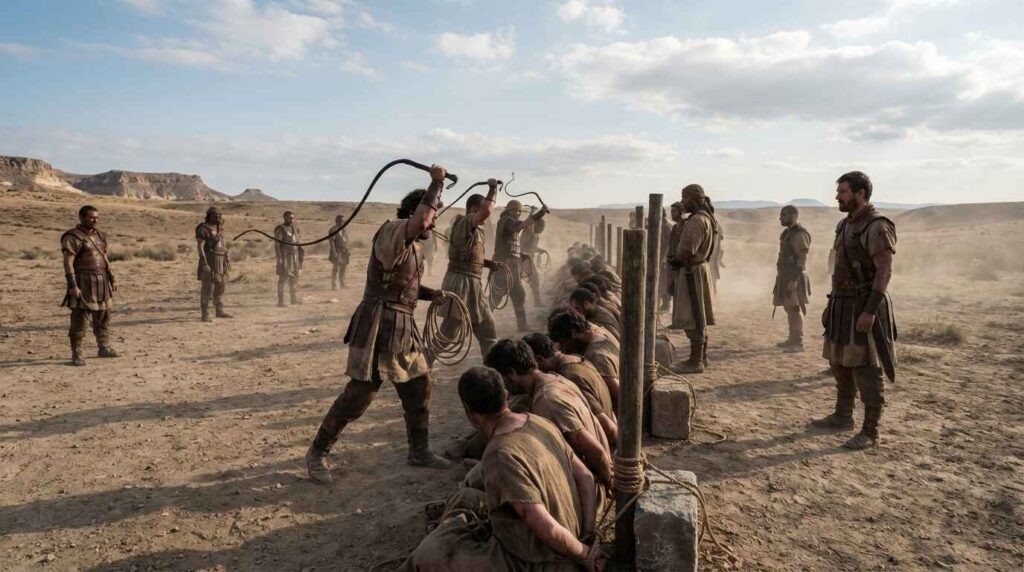
This verse establishes one of the Hudood (fixed legal penalties) of Islam. The punishment for someone who falsely accuses a chaste man or woman of adultery and cannot produce four witnesses is 80 lashes. Additionally, their testimony is permanently rejected in Islamic courts unless they repent sincerely (as stated in verse 5).
After the revelation, the Prophet (PBUH) ordered that the Hadd of Qazf be carried out on those who had spread the accusation publicly. Hassan ibn Thabit (RA), Mistah ibn Uthatha, and Hamnah bint Jahsh all received the prescribed 80 lashes.
Note on Hassan ibn Thabit (RA): Although he received this punishment for participating in spreading the accusation, he remained a respected companion. His repentance was accepted. Some scholars note that his participation was a serious mistake rather than malicious intent like Abdullah ibn Ubayy, and he continued to serve the Prophet (PBUH) as his official poet. The scholars distinguish between the legal penalty and one’s overall rank.
As for Abdullah ibn Ubayy, the chief hypocrite who started it all: he was not punished with lashes because no four witnesses came forward specifically against him in the formal legal sense required by Sharia. However, Allah did not let him escape. He died shortly after, and the Prophet (PBUH) was instructed by Allah not to pray over him (Surah At-Tawbah 9:84). He died disgraced, having achieved nothing from his conspiracy.
References for This Section:
Quran, Surah An-Nur 24:4-5 – the legal ruling of Qazf. Quran, Surah At-Tawbah 9:84 – Allah’s instruction not to pray over Abdullah ibn Ubayy. Sahih Al-Bukhari, Book 86 (Limits and Punishments), Hadith 6831 – on the Hadd of Qazf. Ibn Qudama, Al-Mughni, Vol. 9, p. 60 – classical Hanbali fiqh analysis of Qazf law. Al-Sarakhsi, Al-Mabsut, Vol. 9, p. 96 – Hanafi fiqh analysis. Imam Al-Nawawi, Al-Majmu Sharh Al-Muhadhdhab, Vol. 20, p. 11 – Shafi’i school analysis. Ibn Hajar Al-Asqalani, Fath Al-Bari, Vol. 12, p. 180 – on the application of the Hadd.
9. Lessons Every Muslim Must Learn from the Incident of Ifk
This incident is not just a historical story. It contains lessons that Allah Himself highlighted in the Quran:
First, the duty to assume innocence. When you hear a bad rumor about a person of known good character, your first reaction must be disbelief. Allah directly asked the believers: why did you not say this is an obvious lie?
Second, spreading a false rumor is as sinful as making one. Many people who spread the accusation had no malicious intent, they simply passed on what they heard. But Islamic law holds them accountable.
Third, the Quran teaches us that behind every great trial, Allah has a plan. Aisha’s (RA) innocence was declared not by a court, not by a person, but by Allah Himself through Quran that will be recited until the Day of Judgment.
Fourth, the Quran defines this as the greatest lie. The word Ifk does not mean an ordinary lie. It means a complete inversion of reality, something turned completely upside down from the truth. Allah chose the most extreme word to describe what was said about His Prophet’s wife.
Fifth, Aisha’s (RA) response is a model of faith and dignity. She did not beg, did not break down, and did not confess to something she did not do. She placed her trust completely in Allah.
References for This Section:
Quran, Surah An-Nur 24:12 – the duty to think well (husn al-dhann). Quran, Surah An-Nur 24:15 – warning against spreading rumors. Imam Al-Ghazali, Ihya Ulum Al-Din, Vol. 3, p. 141 – on the sin of spreading rumors (nameemah and gheebaah). Ibn Al-Qayyim, Madarij Al-Salikin, Vol. 2, p. 337 – on the wisdom behind trials. Sahih Al-Bukhari, Book 78 (Good Manners), Hadith 6101 – on avoiding suspicion.
10. The Credibility of the Sources: How Authentic Are These Accounts?
A critical reader may ask: how do we know this incident happened exactly as described? The answer is very important from an Islamic scholarly standpoint.
The primary source is Aisha (RA) herself. She narrated the full account in detail, and it is recorded in both Sahih Al-Bukhari and Sahih Muslim, which are the two most authentic books of Hadith in Islam. Sahih Al-Bukhari (compiled by Imam Muhammad ibn Ismail Al-Bukhari, died 256 AH / 870 CE) is considered by the overwhelming consensus of Islamic scholars to be the most authentic book after the Quran. Sahih Muslim (compiled by Imam Muslim ibn Al-Hajjaj, died 261 AH / 875 CE) is considered the second most authentic.
In the science of Hadith evaluation (Ilm Al-Hadith), this narration is classified as Mutawatir in meaning and Sahih (authentic) in chain. The scholars of Rijal (biography of narrators) have verified every person in the chain of transmission.
The event is also confirmed in the major books of Seerah (biography of the Prophet): Ibn Hisham’s As-Seerah An-Nabawiyyah (based on Ibn Ishaq’s original work, which dates to approximately 150 AH), Al-Waqidi’s Kitab Al-Maghazi (died 207 AH), and Ibn Sa’d’s At-Tabaqat Al-Kubra (died 230 AH).
Furthermore, the revelation of Surah An-Nur 24:11-20 is itself the strongest possible confirmation, because the Quran is the direct word of Allah. Islamic scholars of Asbab Al-Nuzul (reasons for revelation) unanimously agree that these verses were revealed in response to this specific incident. This is documented in every major tafsir work.
References for This Section:
Ibn Al-Salah, Muqaddimah Ibn Al-Salah (Ulum Al-Hadith), p. 11 – on the rank of Sahih Al-Bukhari and Sahih Muslim. Imam Al-Nawawi, Al-Taqrib wa Al-Taysir, p. 5 – classification of hadith types. Ibn Hajar Al-Asqalani, Nukhbat Al-Fikr, p. 22 – on Mutawatir and Ahad classifications. As-Suyuti, Al-Itqan fi Ulum Al-Quran, Vol. 1, p. 28 – science of Asbab Al-Nuzul. Al-Sakhawi, Fath Al-Mughith, Vol. 1, p. 40 – hadith methodology and verification standards.
11. Important Note: No Israeli Narrations (Isra’iliyyat)
It is important to state clearly: this entire account is based purely on authentic Islamic sources, meaning the Quran, the two Sahihs (Bukhari and Muslim), and verified books of Seerah. There are no Israeli narrations (Isra’iliyyat) involved in this incident because this is not a story from the Torah, Bible, or any earlier scripture. It is a purely Islamic historical event fully documented in primary Islamic sources.
The rule among Islamic scholars regarding Isra’iliyyat is that they may only be mentioned for general illustration and must never contradict the Quran and Sunnah. In this case, there is no need for any such narrations because the Islamic sources alone are complete, detailed, and mutually corroborating.
References for This Section:
Ibn Kathir, Al-Bidayah Wan-Nihayah, Vol. 1, Introduction – his famous statement on Isra’iliyyat: ‘We neither confirm them nor deny them unless they agree or contradict our sources.’ Ibn Taymiyyah, Muqaddimah fi Usul Al-Tafsir, p. 35 – rules on Isra’iliyyat in Quranic commentary. Al-Dhahabi, Siyar A’lam Al-Nubala, Vol. 3, p. 16 – methodology of hadith evaluation.
Frequently Asked Questions (FAQs)
FAQ 1: Is the Incident of Ifk mentioned directly in the Quran?
Yes. The Incident of Ifk is directly referenced in Surah An-Nur (Chapter 24), verses 11 through 20. Allah uses the word ‘ifk’ (the greatest lie) in verse 11 and declares Aisha’s complete innocence. These ten verses also establish the Islamic law of Qazf (false accusation) in verse 4 of the same chapter. All classical scholars of tafsir, including Imam Al-Tabari, Ibn Kathir, Al-Qurtubi, and Al-Razi, unanimously confirm that these verses were revealed in response to this specific event.
FAQ 2: Why did Allah wait a full month before revealing Aisha’s innocence?
This is one of the wisest aspects of the incident. Islamic scholars give several reasons for this. Ibn Kathir writes in his tafsir that the delay served multiple purposes: it tested the faith of the believing community, it showed who truly trusted in the Prophet (PBUH) and his household, it exposed the hypocrites and those with weak hearts, and it made the divine declaration of innocence even more powerful when it finally came. If revelation had come immediately, the hypocrites would simply have moved on without consequence. The month-long delay meant the entire community had to take a clear position, and those who spread or supported the lie were fully identified before the divine verdict was given.
FAQ 3: What happened to Hassan ibn Thabit after receiving the Hadd punishment?
Hassan ibn Thabit (RA) was one of the greatest poets in early Islamic history and was famously known as ‘the Poet of the Prophet.’ After receiving the Hadd of 80 lashes for his role in spreading the accusation, he expressed deep remorse. There is scholarly discussion about whether his participation was out of malicious intent or simply a human error in judgment when he trusted what he was told. According to Ibn Hajar Al-Asqalani in Fath Al-Bari (Vol. 8), Hassan continued to serve as the Prophet’s poet and there is no evidence the Prophet (PBUH) permanently withdrew from him. His case shows that the Hadd punishment in Islam is both a legal penalty and a means of expiation, after which the person’s sin is considered cleared.
FAQ 4: What is the Islamic ruling on spreading rumors about people’s honor today?
The Islamic ruling is very clear and has not changed since the time of revelation. Surah An-Nur 24:4 establishes that falsely accusing a chaste person of adultery without four witnesses carries the Hadd of 80 lashes in an Islamic judicial system. Beyond the legal penalty, Surah An-Nur 24:15-16 warns that even repeating such a rumor without knowing its truth is a serious sin. Imam Al-Ghazali in Ihya Ulum Al-Din (Vol. 3) places this under the category of ‘Qazf’ and ‘Buhtan’ (slander). In today’s context, Islamic scholars such as Ibn Baz, Ibn Uthaymeen, and others have explicitly stated that spreading defamatory content about people’s honor on social media falls under the same religious prohibition, even if the legal Hadd cannot be applied outside a proper Islamic court.
Closing Reflection
The Incident of Ifk is one of the most powerful events in all of Islamic history. A false rumor, spread by the worst of people, caused one month of pain to the greatest of people. But at the end, the truth won in the most absolute way possible: Allah Himself spoke from above the seven heavens to declare the innocence of a woman.
This is the story that the Quran calls ‘the greatest lie.’ And it is the story whose answer Allah chose to immortalize in the holy book, so that it will be recited and known by every Muslim until the Day of Judgment.
Aisha (RA) herself said: “I had hoped that the Prophet would see a dream that would clear my name. But I never imagined that Allah would reveal Quran about me, something that would be recited forever. I considered myself too small for Allah to speak of me in the Quran.”
This statement alone tells us everything we need to know about her character and her humility.
Complete Bibliography of Authentic Islamic Sources Used
1. Holy Quran – Surah An-Nur (Chapter 24), verses 4-5 and 11-20; Surah Yusuf (12:18); Surah Al-Ahzab (33:6); Surah At-Tawbah (9:84). 2. Sahih Al-Bukhari – Imam Muhammad ibn Ismail Al-Bukhari (d. 256 AH / 870 CE). Book 64 (Expeditions/Maghazi), Hadith 4141; Book 62, Hadith 3662; Book 86, Hadith 6831. 3. Sahih Muslim – Imam Muslim ibn Al-Hajjaj Al-Naysaburi (d. 261 AH / 875 CE). Book 37 (Repentance/Tawbah), Hadith 2770. 4. As-Seerah An-Nabawiyyah – Ibn Hisham (d. 218 AH), edited from Ibn Ishaq’s original work (d. 150 AH). Vol. 3, pp. 302-315. 5. Kitab Al-Maghazi – Al-Waqidi (d. 207 AH). Vol. 1, p. 406 onwards. 6. At-Tabaqat Al-Kubra – Ibn Sa’d (d. 230 AH). Vol. 8, pp. 66-75. 7. Tafsir Al-Quran Al-Azeem – Ibn Kathir (d. 774 AH). Vol. 6, pp. 1-25 (under Surah An-Nur). 8. Jami Al-Bayan fi Ta’wil Al-Quran (Tafsir Al-Tabari) – Imam Al-Tabari (d. 310 AH). Vol. 18, pp. 85-135. 9. Al-Jami li-Ahkam Al-Quran (Tafsir Al-Qurtubi) – Al-Qurtubi (d. 671 AH). Vol. 12, pp. 195-225. 10. Mafatih Al-Ghayb (Tafsir Al-Kabir) – Imam Al-Razi (d. 606 AH). Vol. 23, pp. 155-190. 11. Fath Al-Bari (Sharh Sahih Al-Bukhari) – Ibn Hajar Al-Asqalani (d. 852 AH). Vol. 8, pp. 455-475; Vol. 12, p. 180. 12. Sharh Sahih Muslim – Imam Al-Nawawi (d. 676 AH). Vol. 17, pp. 110-125. 13. Al-Bidayah Wan-Nihayah – Ibn Kathir (d. 774 AH). Vol. 4, pp. 155-170. 14. Al-Isabah fi Tamyeez As-Sahaba – Ibn Hajar Al-Asqalani (d. 852 AH). Vol. 4, p. 359. 15. Ihya Ulum Al-Din – Imam Al-Ghazali (d. 505 AH). Vol. 3, p. 141. 16. Al-Mughni – Ibn Qudama Al-Maqdisi (d. 620 AH). Vol. 9, p. 60. 17. Madarij Al-Salikin – Ibn Al-Qayyim Al-Jawziyyah (d. 751 AH). Vol. 2, p. 337. 18. Muqaddimah fi Usul Al-Tafsir – Ibn Taymiyyah (d. 728 AH). p. 35.
Note: All references listed are from classically authenticated Islamic scholarly works. No Isra’iliyyat (Israeli narrations) have been used or referenced in this article.