Summary
After the Battle of Yamama in 633 CE, around 700 memorizers of the Quran (Huffaz) were martyred. This alarmed Umar ibn al-Khattab (RA), who feared that large portions of the Quran might be permanently lost if such battles continued. He urged the first Caliph, Abu Bakr al-Siddiq (RA), to compile the Quran into a single written book. Abu Bakr initially hesitated, but eventually agreed. Zaid ibn Thabit (RA), the Prophet’s own scribe, was chosen to lead this monumental task. He applied a strict two-condition verification method for every single verse. The result was the first official Mushaf (written copy) of the Quran, which later became the basis for the standardized copies sent across the Islamic world during the Caliphate of Uthman ibn Affan (RA).
Introduction: A Fear That Changed Islamic History
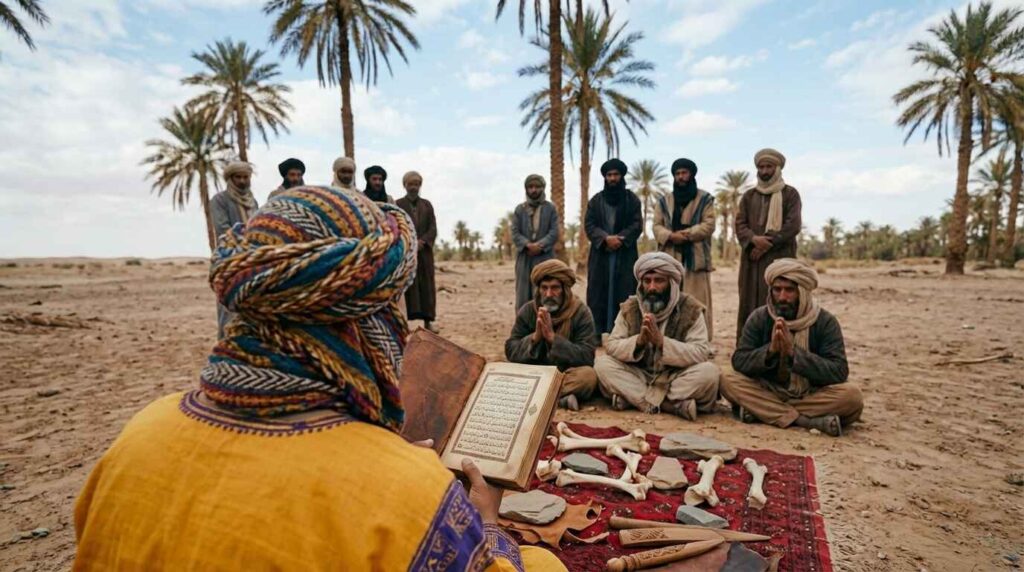
Imagine a time when the words of God were not yet gathered in a single book. They existed on palm leaves, pieces of leather, flat stones, and animal bones, and most importantly, in the hearts and memories of thousands of believers. Now imagine that, in a single battle, 700 of those memory-keepers were killed.
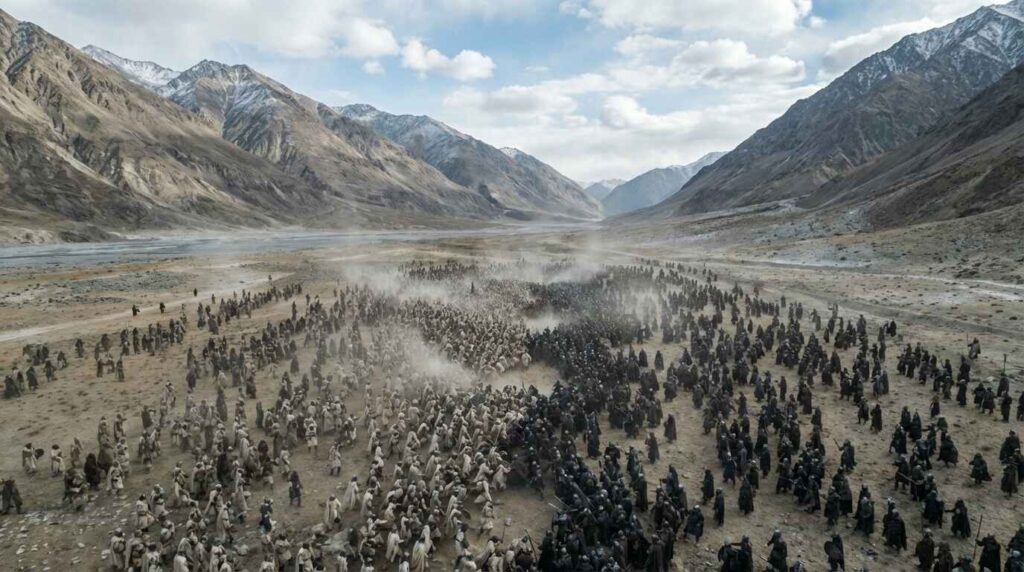
That is exactly what happened in 633 CE, just one year after the death of Prophet Muhammad (peace be upon him). The Battle of Yamama, fought against the false prophet Musaylima al-Kadhdhab, resulted in the martyrdom of approximately 700 companions who had memorized the Quran. This moment triggered a chain of events that would lead to the first official written compilation of the Quran, one of the most important decisions in the entire history of Islam.
This is that story, told carefully, with full references from the most trusted and accepted books of Islamic scholarship.
Part 1: The World Before the First Compilation
How Was the Quran Preserved During the Time of the Prophet?
During the lifetime of Prophet Muhammad (PBUH), the Quran was being preserved in two ways simultaneously: through memorization and through writing. Both methods worked together and supported each other.
Memorization was the primary and most trusted method. Thousands of companions memorized the entire Quran or large portions of it. The Prophet himself reviewed the entire Quran with Angel Jibreel every year during Ramadan, and in the final year of his life, this review happened twice. Zaid ibn Thabit (RA) was present during this final review.
At the same time, the Prophet appointed dedicated scribes called Kuttab al-Wahy (scribes of revelation) who would write down every verse as it was revealed. These scribes included Zaid ibn Thabit, Ali ibn Abi Talib, Muawiyah ibn Abi Sufyan, Ubayy ibn Kab, and others. The written material was recorded on whatever was available: pieces of leather (adim), flat white stones (likhaf), palm-leaf stalks (asib), shoulder bones of camels (aktaf), and wooden boards.
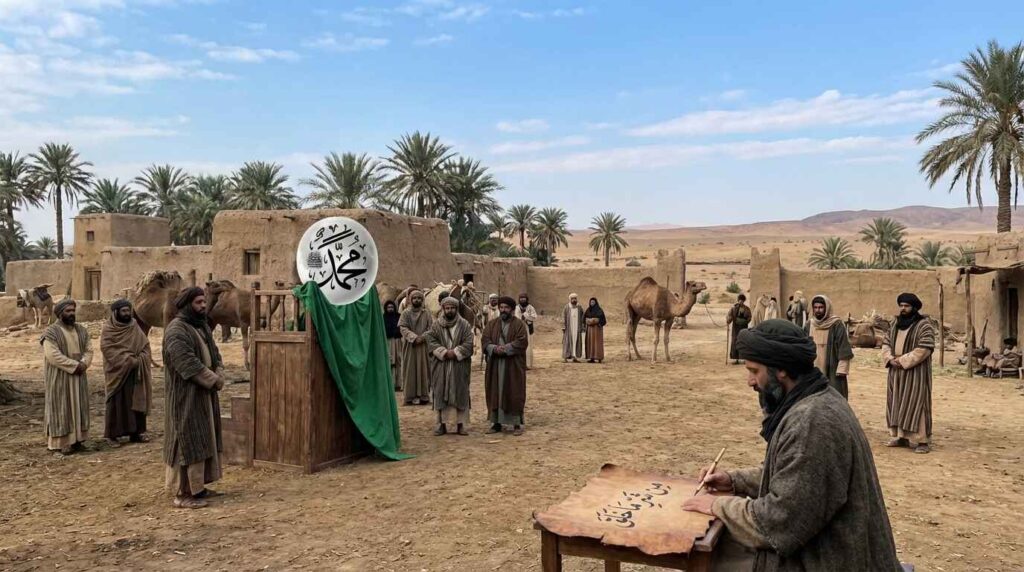
Reference for the Writing Materials and Scribes
Sahih al-Bukhari, Kitab Fada’il al-Quran, Hadith No. 4986 and 4989 – Narrated by Zaid ibn Thabit (RA): ‘Abu Bakr sent for me and I went to him. Umar ibn al-Khattab was with him… I started searching for the Quran and collecting it from palm stalks, thin white stones, and from the men who knew it by heart…’
Sahih al-Bukhari, Kitab al-Tafseer, Hadith No. 4986 (Arabic: Sahih al-Bukhari, Bab Jam al-Quran)
Ibn Abi Dawud al-Sijistani, Kitab al-Masahif, pg. 6-10 – This specialized book lists the writing materials and the names of all known scribes of revelation. It is an accepted primary source by Islamic scholars and is available with verification by Imam al-Dhahabi in his Siyar A’lam al-Nubala.
Al-Suyuti, al-Itqan fi Ulum al-Quran, Vol. 1, pg. 99-105 – Lists all Kuttab al-Wahy by name with chain of narration.
Part 2: The Battle of Yamama and the Fear of Loss
What Was the Battle of Yamama?
After the death of Prophet Muhammad (PBUH) in 632 CE, a man named Musaylima ibn Habib, known in Islamic history as Musaylima al-Kadhdhab (the Liar), falsely claimed prophethood in the region of Yamama (in present-day central Arabia). He had a large following and even tried to imitate the Quran with his own words.
The first Caliph, Abu Bakr al-Siddiq (RA), sent an army under the command of Khalid ibn al-Walid (RA) to fight this group. The battle was fierce and extremely costly. Approximately 1,200 companions of the Prophet were martyred in this single battle, and among them were around 700 who had memorized the Quran in its entirety or large portions of it.
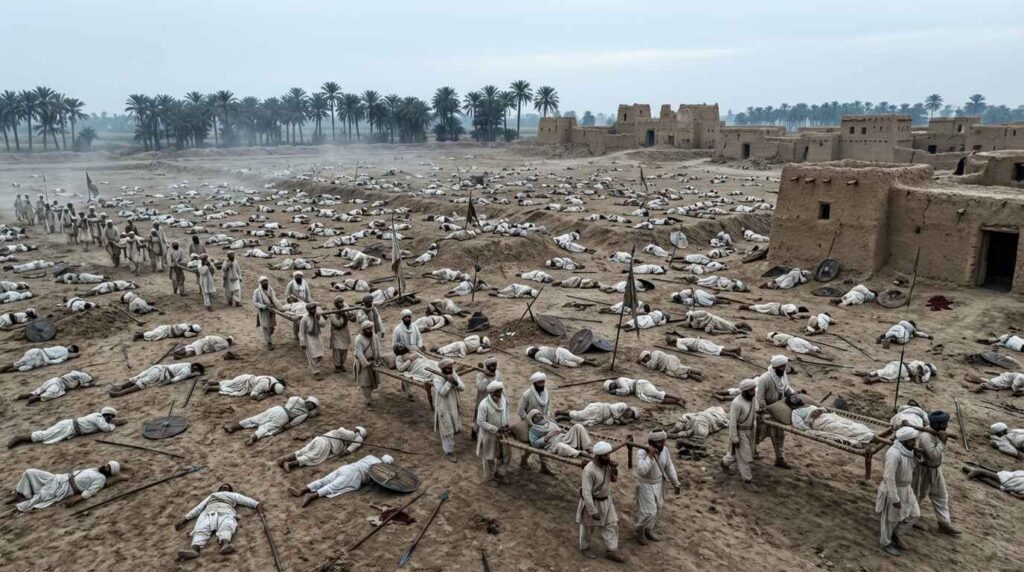
This was the most severe single loss of Huffaz (memorizers) in the history of early Islam. The impact was deeply felt in Medina.
Reference for the Battle of Yamama and the Number of Huffaz Martyred
Sahih al-Bukhari, Hadith No. 4986, Kitab Fada’il al-Quran – ‘Umar came to me and said: The battle casualties on the Day of al-Yamama have been heavy, and I fear that more heavy casualties may take place among the Qurra (reciters) on other battlefields, whereby a large part of the Quran may be lost.’
Ibn Hajar al-Asqalani, Fath al-Bari Sharh Sahih al-Bukhari, Vol. 9, pg. 10-14 – This is the most authoritative commentary on Sahih al-Bukhari. Ibn Hajar explains the number of Huffaz martyred and why Umar’s concern was legitimate and farsighted.
Al-Tabari, Tarikh al-Rusul wa al-Muluk (History of Prophets and Kings), Vol. 3, pg. 287-295 – Describes the Battle of Yamama in detail, including the scale of Huffaz killed. Imam al-Tabari is an accepted historian by the vast majority of Islamic scholars.
Ibn Kathir, al-Bidaya wa al-Nihaya (The Beginning and the End), Vol. 6, pg. 321-325 – Ibn Kathir confirms the numbers and provides additional chains of narration supporting the account.
Part 3: Umar’s Proposal to Abu Bakr
Umar Comes With a Bold Idea
When news of the Battle of Yamama reached Medina, Umar ibn al-Khattab (RA) was deeply troubled. He recognized a danger that others had not yet clearly articulated: if every major battle resulted in the death of hundreds of Huffaz, then over time, entire sections of the Quran that were only preserved in memory might be permanently lost from the Ummah.
Umar went to Abu Bakr (RA), who was the Caliph at the time, and proposed that the entire Quran be gathered and written in a single, organized book, a Mushaf. He said clearly: ‘I fear that casualties may increase among those who know the Quran by heart on other battlefields, and a large part of the Quran may be lost.
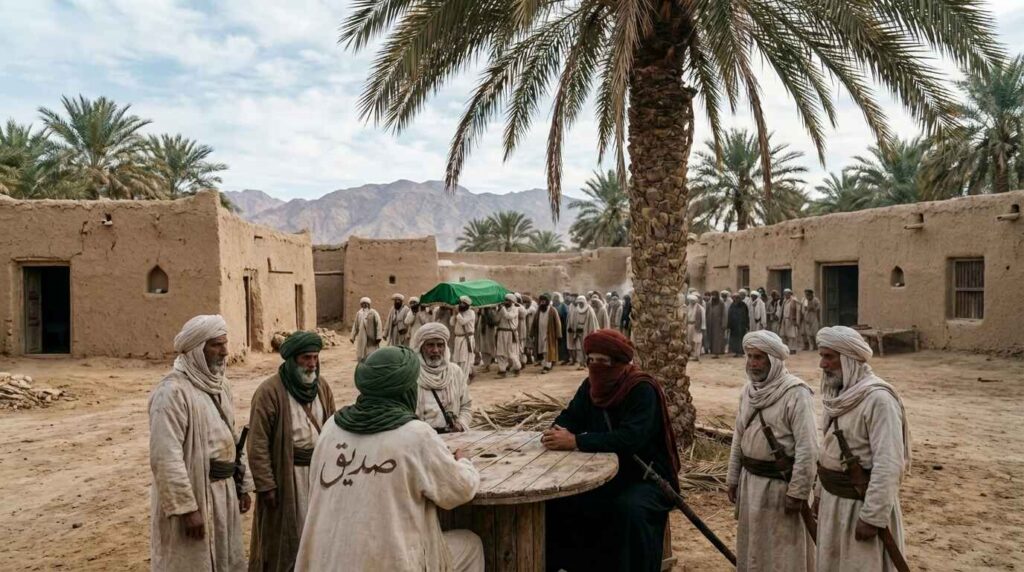
Abu Bakr’s Initial Hesitation and His Reasoning
Abu Bakr’s first reaction was one of reluctance. He said to Umar: ‘How can I do something that the Prophet of Allah (PBUH) did not do himself?’
This was not stubbornness. This was religious caution. Abu Bakr was the most careful of all companions when it came to matters of religion. He did not want to introduce anything into Islam that could be considered a bidah (innovation). For him, if the Prophet had not gathered the Quran into a single book, there must have been wisdom in that.
Umar responded thoughtfully. He explained that this was not creating something new in religion. The Quran had already been fully written down during the lifetime of the Prophet. The task was not writing something new but simply organizing and collecting what already existed into one secure place. This was an administrative and protective decision, not a religious innovation.
The Hadith in Sahih al-Bukhari records this conversation almost word for word. It ends with Abu Bakr saying: ‘Allah expanded my chest for it just as He had expanded Umar’s chest, and I agreed with his opinion.’ From that moment, Abu Bakr was fully committed.
Reference for the Conversation Between Umar and Abu Bakr
Sahih al-Bukhari, Hadith No. 4986, Kitab Fada’il al-Quran – Full narration by Zaid ibn Thabit, confirmed as Sahih (authentic) by all Hadith scholars.
Imam al-Nawawi, Sharh Sahih Muslim – While the full event is in Bukhari, al-Nawawi’s commentary supports the scholarly understanding that Abu Bakr’s hesitation was based on piety, not obstruction.
Ibn Hajar al-Asqalani, Fath al-Bari, Vol. 9, pg. 12 – Ibn Hajar explains in detail why Abu Bakr’s position was legitimate Islamic caution and why Umar’s argument successfully resolved it within the framework of Sharia.
Al-Zarkashi, al-Burhan fi Ulum al-Quran, Vol. 1, pg. 233-237 – Al-Zarkashi is a senior Islamic scholar of Quranic sciences. He discusses the full legal and scholarly reasoning behind why the compilation was considered necessary and permissible.
Part 4: Choosing Zaid ibn Thabit for the Task
Why Was Zaid ibn Thabit Selected?
Abu Bakr and Umar chose Zaid ibn Thabit (RA) to lead this historical task. This was not a random appointment. Zaid had multiple unique qualifications that made him the most suitable person for this responsibility:
- He was one of the primary Kuttab al-Wahy (scribes of revelation) who had written down verses directly in the presence of the Prophet (PBUH).
- He was a Hafiz, meaning he had memorized the entire Quran.
- He was personally present during the final review (al-ard al-akhira) in which the Prophet reviewed the entire Quran with Angel Jibreel in the last year of his life.
- He was known for his intelligence, his trustworthiness, and his careful nature. The Prophet himself praised him.
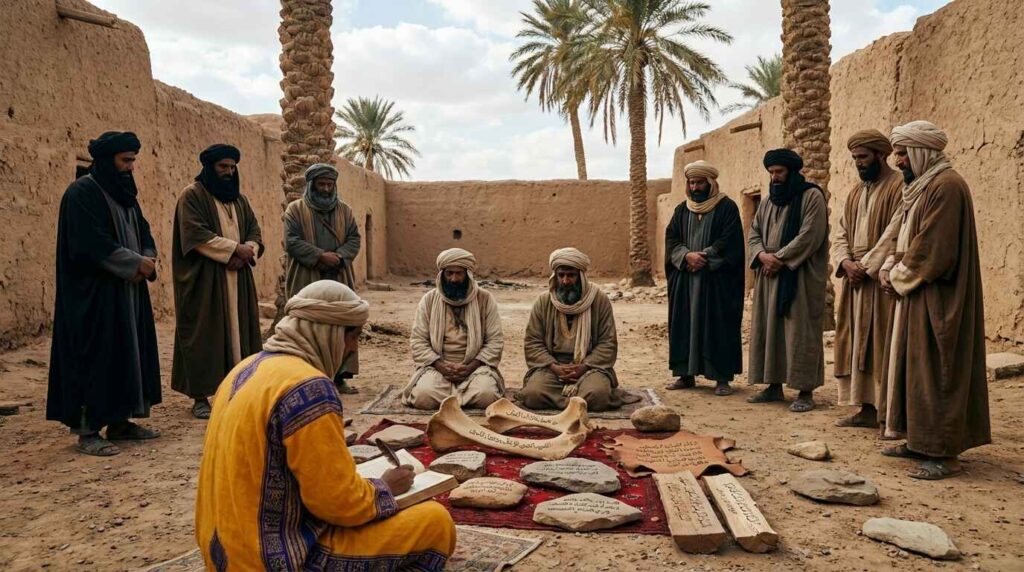
Zaid was young at the time, but his qualifications were extraordinary. The Prophet had said about him: ‘The most knowledgeable of my Ummah about what is lawful and unlawful is Muadh, and the most knowledgeable about the laws of inheritance is Zaid ibn Thabit.’ This gives you a sense of the level of trust the Prophet had in Zaid.
Zaid’s Initial Reaction
Interestingly, Zaid himself was initially reluctant. He said: ‘By Allah, if they had asked me to move a mountain from its place, it would not have been heavier for me than what they have commanded me to do, which is collecting the Quran.’
This shows how seriously he understood the weight of the task. But after reflection, he accepted.
References for Zaid’s Selection and Qualifications
Sahih al-Bukhari, Hadith No. 4986 – Zaid himself narrates his own selection, his hesitation, and his methodology. This is a first-person account preserved in the most authentic Hadith collection in Islam.
Sunan al-Tirmidhi, Hadith No. 2906, Kitab al-Manaqib – ‘The most knowledgeable about the laws of inheritance is Zaid ibn Thabit.’ Classified as Sahih by al-Tirmidhi himself and later confirmed by al-Albani.
Ibn Abi Dawud, Kitab al-Masahif, pg. 10-12 – This book is entirely dedicated to the history of the written Quran and confirms Zaid’s role from multiple chains.
Al-Suyuti, al-Itqan fi Ulum al-Quran, Vol. 1, pg. 130-136 – Al-Suyuti discusses Zaid’s unique qualifications in depth and explains why no other companion was equally suited.
Part 5: Zaid’s Strict and Careful Method of Verification
The Two-Condition Rule
Zaid ibn Thabit did not simply collect whatever was brought to him. He established a rigorous and careful method of verification. Before any verse could be included in the official Mushaf, two conditions had to be met at the same time:
- Condition 1 – Written Proof: The verse had to already exist in written form, recorded during the lifetime of the Prophet (PBUH) in his presence.
- Condition 2 – Oral Testimony: At least two companions had to give direct personal witness saying: ‘I heard this verse from the mouth of the Prophet of Allah (PBUH) myself.’
Both conditions had to be satisfied simultaneously. Memory alone was not enough. Written text alone was not enough. Only when both matched and were confirmed by multiple witnesses would the verse be accepted.
This was an extraordinarily careful approach. It meant that the compiled Mushaf was cross-verified through two independent channels, which is one of the strongest possible methods of historical verification.
References for Zaid’s Two-Condition Method
Sahih al-Bukhari, Hadith No. 4986 – Zaid’s own words describe his methodology: ‘I started searching for the Quran and collecting it from palm stalks, thin white stones, and from the men who knew it by heart, till I found the last two Verses of Surat at-Tawba…’
Ibn Hajar al-Asqalani, Fath al-Bari, Vol. 9, pg. 14-16 – Ibn Hajar explains the legal and scholarly significance of Zaid’s two-witness requirement, comparing it to the standards set in Islamic jurisprudence for accepting testimony.
Al-Suyuti, al-Itqan, Vol. 1, pg. 135-140 – Al-Suyuti provides detailed explanation of why both written and oral verification were required and how this method guaranteed the authenticity of every verse.
Al-Qadi Abu Bakr ibn al-Tayyib al-Baqillani, al-Intisar li Sahih Naql al-Quran – This classical Islamic work specifically addresses the chain of transmission of the Quran and confirms Zaid’s methodology as the accepted standard.
Part 6: The Special Case of Surah al-Tawbah, Verses 128-129
The Moment of a Single Witness
As the work of compilation was nearing its end, Zaid reached the final verses of Surah al-Tawbah (Chapter 9). After an exhaustive search through all available written materials and all available witnesses, these two verses were found written down by only one companion: Abu Khuzaymah al-Ansari (RA). The written record existed with him alone.
This created a problem under the two-condition rule. The written proof was from one person only. However, those overseeing the project remembered a very special statement the Prophet (PBUH) had made during his own lifetime.
The Special Status of Abu Khuzaymah al-Ansari
There is a well-known incident in the books of Hadith where the Prophet (PBUH) had accepted the testimony of Abu Khuzaymah al-Ansari alone, equal to the testimony of two men, in a particular dispute. When asked about this, the Prophet confirmed it. From that day forward, Abu Khuzaymah was known among the companions by the honorific title Dhu al-Shahadatayn, meaning ‘the one whose testimony equals two.’
Because of this special honor, granted directly by the Prophet himself, Abu Khuzaymah’s single testimony regarding the written Quran was accepted as meeting the standard of two witnesses. The two verses, which are verses 128 and 129 of Surah al-Tawbah, were accepted and included.
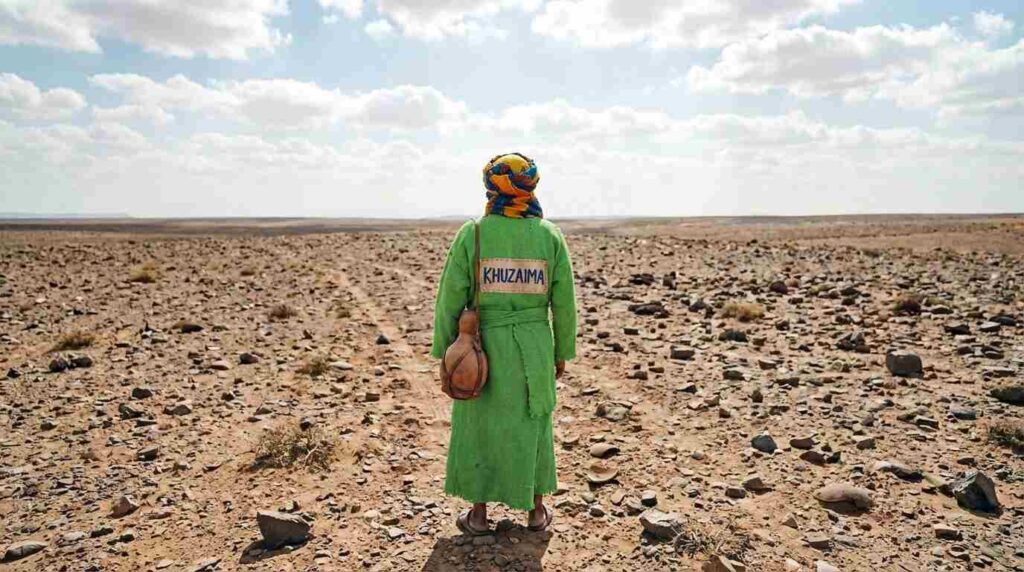
It is important to note that these verses were not unknown. They were memorized by companions and were part of the recitation. The point was that for the written Mushaf, Zaid required written documentation plus witnesses, and the only written copy came from Abu Khuzaymah.
What Do These Verses Say?
Verses 128 and 129 of Surah al-Tawbah describe the character and concern of the Prophet Muhammad (PBUH) for his people, and end with Allah being sufficient as a protector. They are beautiful verses that emphasize the mercy and compassion of the Prophet.
References for This Incident
Sahih al-Bukhari, Hadith No. 4986 – Zaid says: ‘I found the last two verses of Surat at-Tawba with Abi Khuzaymah al-Ansari, and I could not find them with anyone else.’ This is the primary and most trusted source.
Sunan Abi Dawud, Hadith No. 3607, Kitab al-Aqdiya – The original incident where the Prophet granted Abu Khuzaymah’s testimony the status of two men is narrated here with a strong chain. This Hadith is also confirmed in Musnad Ahmad, Vol. 5, pg. 215.
Ibn Hajar al-Asqalani, Fath al-Bari, Vol. 9, pg. 15-17 – Ibn Hajar provides the full analysis of why accepting Abu Khuzaymah’s single testimony was religiously valid and internally consistent.
Al-Suyuti, al-Itqan, Vol. 1, pg. 140-143 – Discusses this specific case in the chapter on the collection of the Quran.
Al-Nawawi, Sharh Sahih Muslim, commentary on the status of Dhu al-Shahadatayn – Confirms the legitimacy of the honorific title and its implications for testimony.
Part 7: The Completion and Safekeeping of the First Mushaf
Where Was the Mushaf Kept?
After the compilation was complete, the verified Mushaf, which scholars call al-Suhuf (the Sheets), was given to the custody of Abu Bakr (RA) himself. After his death in 634 CE, it passed to Umar ibn al-Khattab (RA), who was the second Caliph. After Umar’s martyrdom in 644 CE, the Mushaf was entrusted to his daughter Hafsah bint Umar (RA), who was also one of the wives of the Prophet (PBUH).
Hafsah’s copy is historically significant because it became the master reference that the third Caliph, Uthman ibn Affan (RA), would later use during the second phase of Quranic standardization.
References for the Safekeeping of the Mushaf
Sahih al-Bukhari, Hadith No. 4986 – ‘So Abu Bakr kept it with himself till Allah took his soul, then Umar kept it with himself till Allah took his soul, and then it was kept with Hafsa bint Umar.’
Part 8: The Uthmanic Standardization, Completing the Story
The Second Step: Uthman’s Copies
About twelve years after Abu Bakr’s compilation, a new concern arose. As Islam spread rapidly to Persia, Syria, Egypt, and beyond, different communities began reciting the Quran with slightly different dialects and in slightly different forms. A companion named Hudhayfah ibn al-Yaman (RA) warned the third Caliph, Uthman ibn Affan (RA), that if this was not addressed, disputes over the Quran could tear the Muslim community apart.
Uthman acted swiftly. He sent a message to Hafsah (RA) asking her to send him the original Mushaf compiled during Abu Bakr’s era. He then formed a committee, again led by Zaid ibn Thabit (RA), along with three other senior Qurashi companions: Abdullah ibn al-Zubayr, Said ibn al-As, and Abd al-Rahman ibn al-Harith ibn Hisham.
Their task was to produce several identical copies of the Quran based on the original Mushaf of Abu Bakr, standardizing everything to a single unified written form. These standardized copies, known as al-Masahif al-Uthmaniyyah, were then sent to the major cities of the Islamic world, including Mecca, Kufa, Basra, Damascus, and others. The original Mushaf was returned to Hafsah.
Uthman then ordered that all other written copies of the Quran that differed in arrangement or form be destroyed, to prevent any future confusion. This was a decision that Islamic scholars have consistently upheld as wise, necessary, and religiously sound.
References for the Uthmanic Standardization
Sahih al-Bukhari, Hadith No. 4987, Kitab Fada’il al-Quran – Narrated by Anas ibn Malik (RA): Hudhayfah warned Uthman, who then ordered the standardization. This is the direct primary source.
Ibn Abi Dawud, Kitab al-Masahif, pg. 18-28 – The most detailed classical source specifically about the history of written Masahif, including the names of cities that received Uthmanic copies and the number of copies made. Scholars debate whether five, six, or seven copies were made. The book presents all views.
Ibn Kathir, Fada’il al-Quran, pg. 50-64 – This is a section within Ibn Kathir’s broader tafseer works. He provides a comprehensive account of the Uthmanic compilation with full chains of narration.
Al-Suyuti, al-Itqan, Vol. 1, pg. 160-175 – Al-Suyuti discusses the destruction of variant copies and provides the scholarly consensus that this was fully justified.
Part 9: The Accepted Islamic Scholarly Consensus
What Do Ulama Say About These Events?
The events of the Quranic compilation are among the most well-documented in Islamic history. They are recorded through multiple strong chains of narration, primarily in Sahih al-Bukhari, which is considered the most authentic book after the Quran by the vast majority of Islamic scholars.
The scholars unanimously agree on the following points: First, that the Quran was fully complete and protected during the lifetime of the Prophet (PBUH). Second, that the compilation by Zaid ibn Thabit under Abu Bakr was a necessary and legitimate administrative step, not a religious innovation. Third, that the Uthmanic standardization was equally legitimate and is the reason the Quran exists in a single unified form today. Fourth, that no verse of the Quran was lost in any of these processes. The evidence of multiple written sources and hundreds of living Huffaz makes this certain.
Key Reference Books Accepted Across Islamic Schools of Thought
Sahih al-Bukhari by Imam Muhammad ibn Ismail al-Bukhari (194-256 AH) – Universally accepted as the most authentic Hadith collection. Primary source for this entire topic. Kitab Fada’il al-Quran, Hadith Nos. 4986-4993.
Al-Itqan fi Ulum al-Quran by Imam Jalal al-Din al-Suyuti (849-911 AH) – The most comprehensive classical encyclopedia on the sciences of the Quran. Vol. 1, chapters on Jam al-Quran (Collection of the Quran).
Fath al-Bari Sharh Sahih al-Bukhari by Imam Ibn Hajar al-Asqalani (773-852 AH) – The definitive commentary on Sahih al-Bukhari. Vol. 9, pages 10-22 for the compilation chapters.
Kitab al-Masahif by Imam Abu Bakr ibn Abi Dawud al-Sijistani (230-316 AH) – The earliest and most specialized book specifically about the written Quran. Accepted by Ibn al-Nadim, al-Dhahabi, and Ibn Hajar as a reliable source.
Al-Bidaya wa al-Nihaya by Ibn Kathir (701-774 AH) – Accepted Islamic historical encyclopedia covering the compilation events in Vol. 6.
Al-Burhan fi Ulum al-Quran by Imam al-Zarkashi (745-794 AH) – Alongside al-Itqan, this is considered one of the two most important classical works in Quranic sciences.
Part 10: Why This Story Matters
The story of the Quranic compilation is remarkable for what it reveals. It shows that the companions of the Prophet were not passive followers. They were careful, thoughtful, and deeply responsible people who understood the weight of what had been entrusted to them.
Abu Bakr’s hesitation was not weakness. It was piety. Umar’s insistence was not pressure. It was wisdom. Zaid’s careful method was not bureaucracy. It was love and reverence for the Word of God.
The result of their work is the Quran you can hold in your hands today. Every single verse was verified through multiple channels. No verse was accepted on the basis of a single memory alone. No verse was accepted on the basis of a single written source alone. Everything was cross-checked, confirmed, and authenticated.
This is not just Islamic history. This is one of the most extraordinary examples of the careful preservation of a religious text in all of human history.
Frequently Asked Questions (FAQ)
FAQ 1: Was the Quran fully written down during the time of the Prophet?
Yes. All verses of the Quran were written down in the presence of the Prophet (PBUH) by his appointed scribes. However, these written materials were kept separately and were not yet arranged in a single bound book. The job of the Quran scribes was to record, not to compile into one volume. The compilation into a single Mushaf happened after his death under Abu Bakr (RA). Source: Sahih al-Bukhari, Hadith No. 4986; Al-Itqan, Vol. 1, pg. 99.
FAQ 2: Were any verses of the Quran lost after the Battle of Yamama?
No. Not a single verse was lost. The Quran was preserved both in writing and in the memories of hundreds of surviving companions. Zaid ibn Thabit’s careful two-condition verification process ensured that only fully verified verses were included, and his search confirmed that all verses were available through multiple sources. Source: Sahih al-Bukhari, Hadith No. 4986; Fath al-Bari, Vol. 9, pg. 14.
FAQ 3: Why did Uthman order other Quran copies to be destroyed?
Because after Islam spread to many non-Arab regions, people began reciting slightly different variations. Uthman’s standardized copies were based directly on the Abu Bakr Mushaf, which was verified by Zaid ibn Thabit. Destroying variant copies was done to prevent long-term confusion and division. This decision is supported by the unanimous agreement of the major companions. Source: Sahih al-Bukhari, Hadith No. 4987; Kitab al-Masahif, pg. 18-28.
FAQ 4: How do we know the Quran we have today is the same as what was revealed to the Prophet?
The evidence is threefold. First, the continuous unbroken chain of memorization (tawatur) from the time of the Prophet to today, with millions of Huffaz in every generation. Second, the written chain beginning from Zaid’s verified Mushaf, which was copied by Uthman and preserved. Third, the unanimous agreement of the entire generation of companions, who had direct knowledge of the revelation, that the compiled Mushaf was complete and accurate. No companion ever disputed its completeness. Source: Al-Itqan, Vol. 1, pg. 160-175; Ibn Kathir, Fada’il al-Quran, pg. 60.
Final Word
The preservation of the Quran is not a miracle that happened overnight. It was, at every stage, a careful and human effort guided by deep faith, extraordinary diligence, and love for the Word of God. The companions did not take shortcuts. They asked for proof. They required witnesses. They cross-checked everything.
The Quran you read today passed through the hands of the most careful and trusted people in Islamic history. And before that, it lived in their hearts.
That is why it is still here.
Note: All Hadith references in this article are from accepted Sunni collections. No Isra’iliyyat (narrations traced to Jewish or Christian sources) have been used. All historical claims are based on chains of narration verified by classical Hadith scholars including al-Bukhari, Muslim, Ibn Hajar, and al-Suyuti.