The Extraordinary Story of Uwais al-Qarni
A historically verified account from authentic Islamic sources
Quick Summary
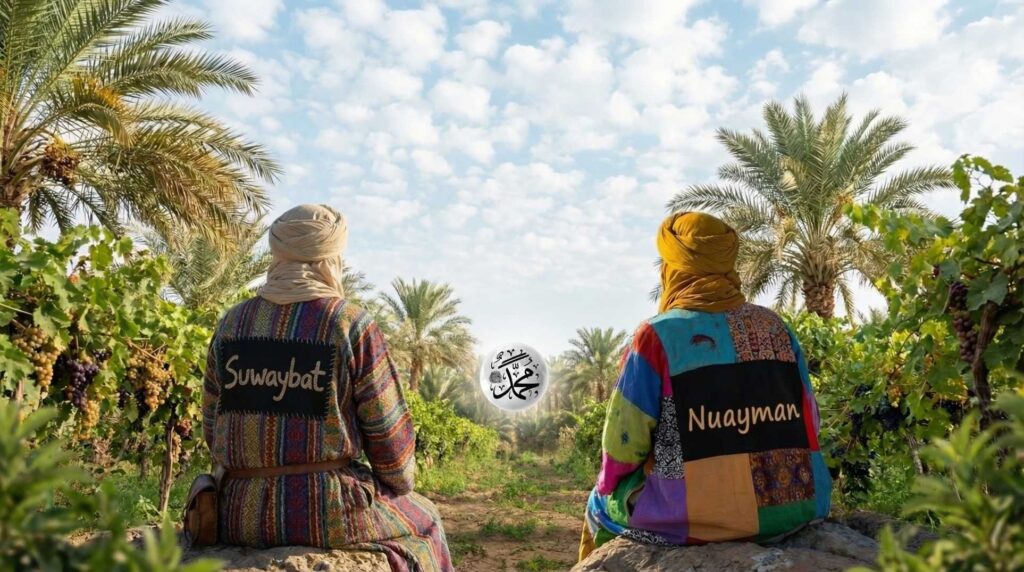
Uwais al-Qarni (Uwais ibn Amir al-Muradi al-Qarni) was a Yemeni man who lived during the time of the Prophet Muhammad (SAW) but never got to meet him in person, because he stayed home to care for his elderly mother. Despite never being a Companion (Sahabi) in the traditional sense, the Prophet (SAW) praised him so highly that he told Umar ibn al-Khattab (RA) and Ali ibn Abi Talib (RA) to seek his prayers. His story is one of the most moving examples of how Allah honors those who serve their parents and remain humble before Him.
Who Was Uwais al-Qarni? A Man Hidden in Plain Sight
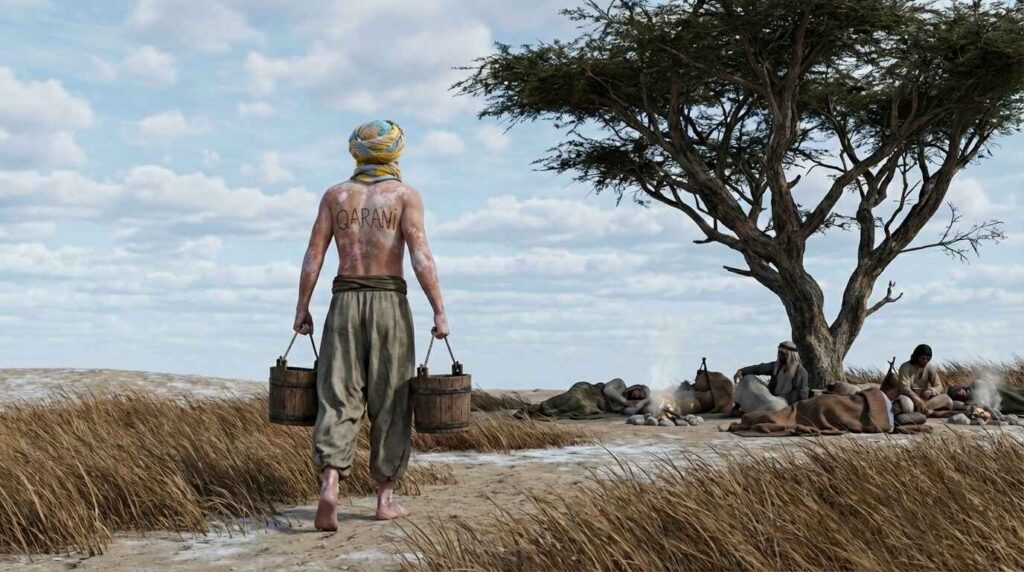
In the vast deserts of Yemen, among the rocky plains of the Qarn tribe, lived a man that almost nobody knew. His name was Uwais ibn Amir al-Muradi al-Qarni. He was a simple camel herder. He wore rough clothes. He had no wealth, no social status, and no fame. To the people around him, he was just another face in the crowd.
But in the sight of Allah, this unknown man was something far greater.
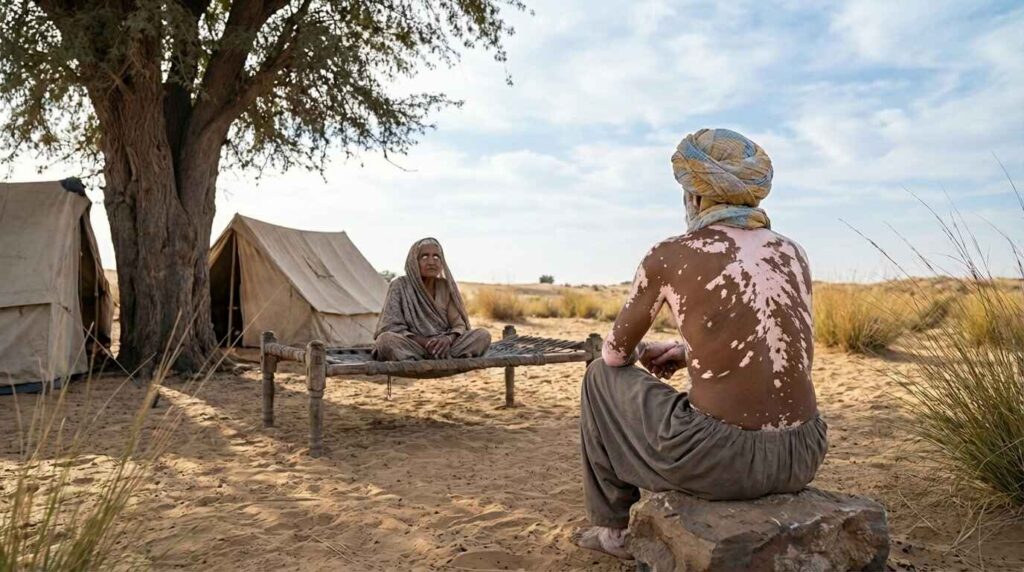
Uwais had a skin condition called leprosy (baras in Arabic), which caused white patches to appear on his body. He prayed sincerely to Allah to heal him, and his disease was cured completely, except for a small coin-sized spot that remained, as a sign, a mark that would later help two of the greatest men in Islamic history identify him.
He was devoted to his mother in a way that few people can truly understand. She was elderly, weak, and entirely dependent on him. Because of his duty to her, Uwais could never leave Yemen to travel to Madinah to meet the Prophet (SAW). This was not laziness or disinterest. This was the highest form of sacrifice.
Reference: Who Was Uwais al-Qarni
Source 1: Sahih Muslim, Kitab al-Fada’il al-Sahabah, Hadith No. 2542 (also numbered 6185 in some editions). Imam Muslim ibn al-Hajjaj (d. 261 AH / 875 CE). This is the primary and most authentic hadith about Uwais al-Qarni. It is found in the section on the virtues of the Companions and Tabi’in.
Source 2: Jami al-Tirmidhi, Kitab al-Manaqib, Hadith No. 3861. Imam Abu Isa al-Tirmidhi (d. 279 AH / 892 CE) graded this hadith as Hasan Sahih (Good and Authentic).
Source 3: Hilyat al-Awliya wa Tabaqat al-Asfiya, Vol. 2, pp. 79-87. Author: Imam Abu Nu’aym al-Isfahani (d. 430 AH / 1038 CE). This is one of the most detailed biographical accounts of Uwais, based on chains of narration from Tabi’in sources.
Note on Authenticity: Islamic scholars have graded the core narration about Uwais in Sahih Muslim as Sahih (authentic), making it among the most reliable stories in Islamic tradition. There is scholarly consensus (ijma) on accepting this narration.
The Prophet’s Prophecy: A Description Given Years Before
Before we talk about what happened after the Prophet (SAW) passed away, we need to understand what he said during his lifetime. It is reported in Sahih Muslim that the Prophet Muhammad (SAW) said to Umar ibn al-Khattab (RA) and Ali ibn Abi Talib (RA):
“There will come to you from Yemen a man called Uwais ibn Amir, of the Murad tribe, then of the Qarn clan. He had leprosy, but it was cured except for a spot the size of a dirham. He has a mother to whom he is very dutiful. If he were to swear an oath by Allah, Allah would fulfill it. If you are able to, ask him to pray for your forgiveness.”
Let us think about what this hadith is actually saying. The Prophet (SAW) gave a precise physical description of a man who had not yet arrived. He described his tribal background, his appearance, his character, and his unique standing with Allah. This was not a general statement. It was a specific identification.
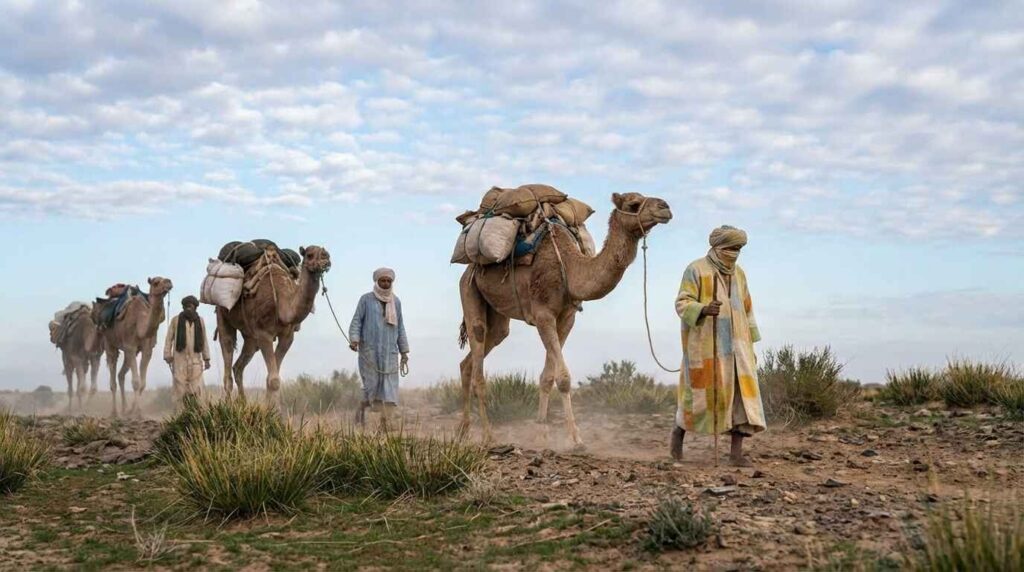
The phrase “if he were to swear an oath by Allah, Allah would fulfill it” is one of the most powerful statements in this narration. In Islamic theology, this indicates that a person has reached a level of closeness with Allah (known as wilayah, or sainthood) where their sincere prayers are answered. Scholars call such people the Awliya (friends) of Allah. Uwais was one of them, yet he lived as a poor camel herder known to almost no one.
Reference: The Prophet’s Words About Uwais
Primary Source: Sahih Muslim, Book 44 (Kitab Fada’il al-Sahabah), Hadith 2542. The full Arabic text reads: ‘Ya’tee ‘alaykum Uwais ibn Amir ma’a amdad al-Yaman min Murad thumma min Qarn…’ This is a mutawatir-level well-known report in hadith collections.
Secondary Source: Musnad Ahmad ibn Hanbal, Vol. 1, p. 337, Hadith 3121. Imam Ahmad (d. 241 AH / 855 CE) also narrated this hadith with a slightly different chain of narrators, confirming the multiple pathways of transmission.
Scholarly Commentary: Imam al-Nawawi (d. 676 AH / 1277 CE) in his Sharh Sahih Muslim (Explanation of Sahih Muslim), Vol. 16, p. 95, explains this hadith in detail and confirms the status of Uwais as a major figure among the Tabi’in.
Note: The word ‘Tabi’i’ (plural: Tabi’in) means one who met a Companion of the Prophet but not the Prophet himself. Uwais is classified as a Tabi’i because he is reported to have met some Companions later in life. His category in Islamic history is confirmed by Ibn Hajar al-Asqalani in al-Isabah fi Tamyiz al-Sahabah, Vol. 1, p. 358.
Umar’s Years-Long Search: A Caliph Looking for a Camel Herder
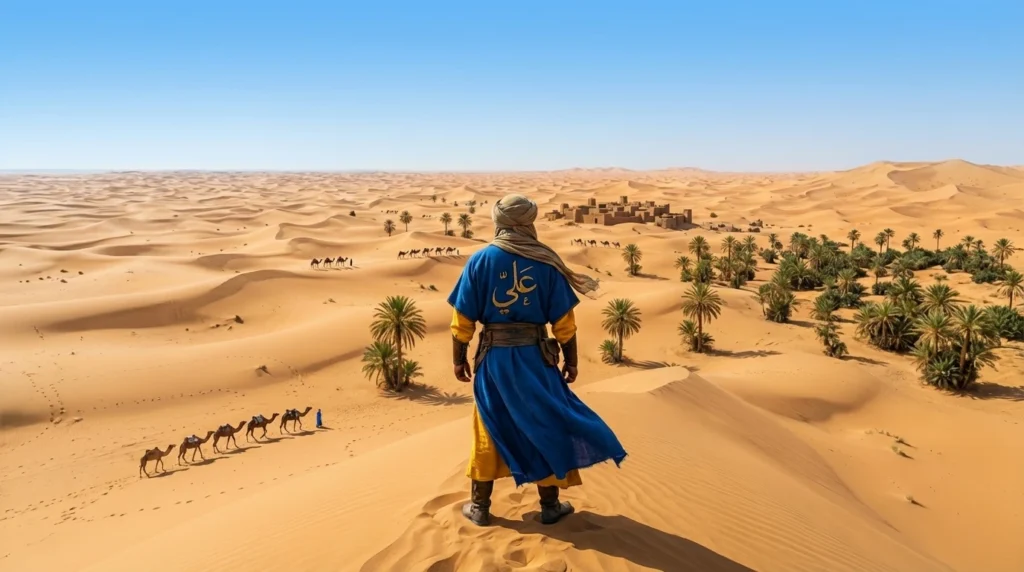
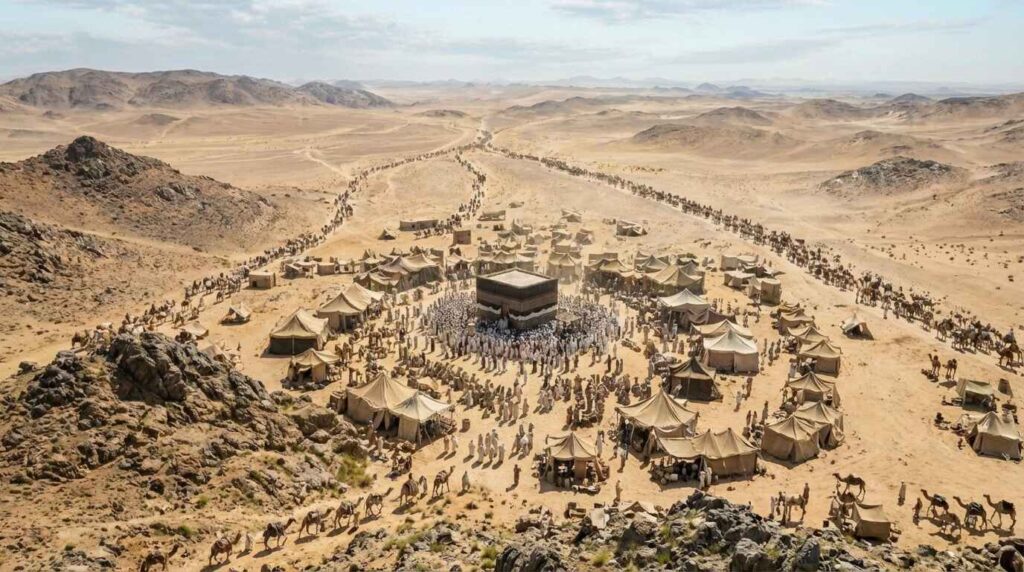
After the Prophet (SAW) passed away in 11 AH (632 CE), Umar ibn al-Khattab (RA) became the second Caliph of Islam. He was one of the most powerful men on earth. He commanded armies. Nations feared his name. Yet every single year at the time of Hajj, he would stand at the entrance of the Yemeni caravans and ask a question that must have shocked everyone around him.
He would call out: “Is there anyone here from the Murad tribe?” And when people from that tribe came forward, he would ask: “Is there a man among you called Uwais ibn Amir?”
People were confused. Why was the Caliph looking for this ordinary man? Some must have laughed quietly among themselves. A ruler searching for a poor camel herder? It did not make sense to the people of that time. But Umar knew something they did not. He had been given a direct command by the best of creation (SAW), and he intended to fulfill it.
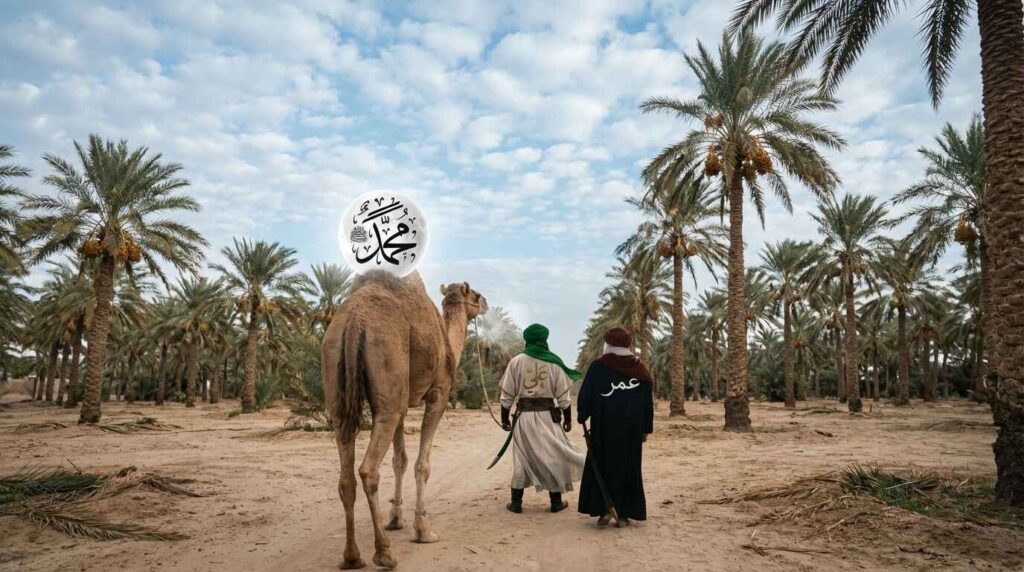
This went on for several years. Year after year, caravan after caravan, Umar asked the same question and received no answer. This shows us something important about Umar’s character: he did not give up on the words of the Prophet (SAW), no matter how long it took.
Reference: Umar’s Annual Search
Primary Source: Sahih Muslim, Hadith 2542. The full narration includes the description of Umar asking Yemeni pilgrims at Hajj each year, making this the core reference for this part of the story.
Historical Context: Umar ibn al-Khattab became Caliph in 13 AH (634 CE). The encounter with Uwais is believed to have occurred sometime between 17 AH and 23 AH, based on historical chronology in Tabaqat Ibn Sa’d.
Source on Chronology: Al-Tabaqat al-Kubra by Muhammad ibn Sa’d (d. 230 AH / 845 CE), Vol. 6, pp. 104-112. This is one of the earliest and most comprehensive biographical dictionaries in Islamic history. Ibn Sa’d discusses Uwais in the section on Tabi’in from Yemen.
Note: Al-Tabaqat al-Kubra is considered a reliable historical source in Sunni Islamic scholarship. It is accepted by major scholars including Ibn Hajar al-Asqalani and Imam al-Dhahabi.
The Meeting at Hajj: When Two Giants Found a Hidden Saint
Then came the year when everything changed.
A caravan from Yemen arrived for Hajj, and among the Yemeni pilgrims was an old man. When Umar (RA) asked him about Uwais, the old man paused. He was the uncle of Uwais. He said something like: “Yes, my nephew’s name is Uwais. But he is a very simple and ordinary man. He is out in the field right now, grazing the camels. Why are you asking about him?”
Umar and Ali (RA) immediately went to find him. The narration in Sahih Muslim describes what they found: a man of medium height, praying in the open field, with camels grazing nearby. He was thin, humble, and completely unaware of the honor that was about to come to him.
When he finished his prayer, Umar stepped forward and greeted him with Salaam. He asked for his name, and the man quietly confirmed: “My name is Uwais.”
Then Umar took his hand and looked. There, on his wrist or forearm, was the small coin-sized white mark. The exact mark the Prophet (SAW) had described years before.
Umar’s eyes filled with tears. He said: “The Messenger of Allah (SAW) told us about you. He told us to ask you to pray for our forgiveness.”
What happened next is one of the most humbling moments in all of Islamic history.
Uwais was shaken. He could not understand why these two great men of Islam, companions of the Prophet himself, were standing before him asking for his prayers. He said something to the effect of: “You are the companions of the Messenger of Allah. I am just an ordinary man. It should be me asking you.”
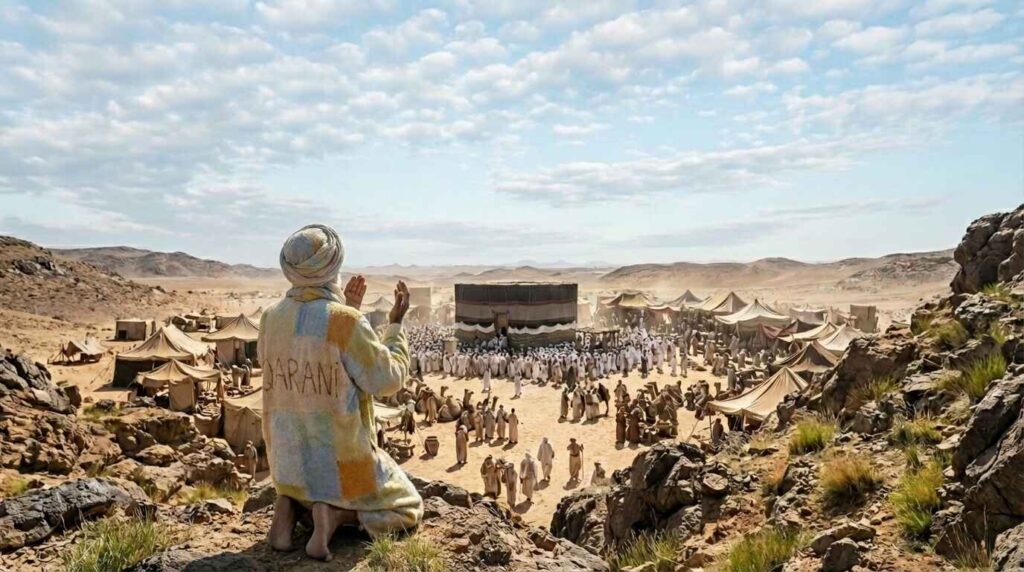
But when Umar and Ali insisted and reminded him that this was the direct instruction of the Prophet (SAW), Uwais raised his hands. And he prayed. He prayed for Umar and Ali, and according to some narrations, for the entire Ummah of the Prophet Muhammad (SAW).
Reference: The Meeting
Primary Source: Sahih Muslim, Hadith 2542 (Kitab Fada’il al-Sahabah). The meeting between Umar, Ali, and Uwais is narrated in detail here. Imam Muslim’s chain of narration for this hadith goes through Usayr ibn Jabir, who was a direct eyewitness to the meeting according to some accounts.
Supporting Source: Jami al-Tirmidhi, Hadith 3861, confirms the broad outline of this meeting and the Prophet’s description of Uwais.
Scholarly Commentary: Ibn al-Athir (d. 630 AH / 1233 CE) in his work Usd al-Ghabah fi Ma’rifat al-Sahabah, Vol. 1, pp. 177-178, discusses Uwais and classifies him among the Tabi’in. He also references the meeting with Umar and Ali.
Note on Ali’s Presence: Some versions of this narration mention only Umar, while others include Ali. Imam al-Nawawi reconciles this by stating that both were present in the full narration of Sahih Muslim, and that shorter versions simply omit one name for brevity. This is standard in hadith sciences.
Why Uwais Never Met the Prophet (SAW): The Power of Serving Your Mother
This is perhaps the most heart-touching part of this entire story. Uwais al-Qarni lived in Yemen during the time the Prophet (SAW) was in Madinah. He wanted to go. He longed to see the Prophet (SAW), to sit with him, to hear his voice. Every Muslim at that time who heard about the Prophet (SAW) would have had the same desire.
But Uwais could not go. His mother was old and frail, and she needed him completely. He chose to stay.
According to the narrations, Uwais did try once to visit the Prophet (SAW). He traveled to Madinah but found that the Prophet (SAW) was not home. He could not wait, because he could not leave his mother alone for long. He returned to Yemen without meeting him.
When the Prophet (SAW) came home and learned that Uwais had come and left, he did not express regret or sorrow in the ordinary sense. Instead, he honored Uwais by mentioning him to his most senior Companions. The man who served his mother had earned a status that even many Companions might envy.
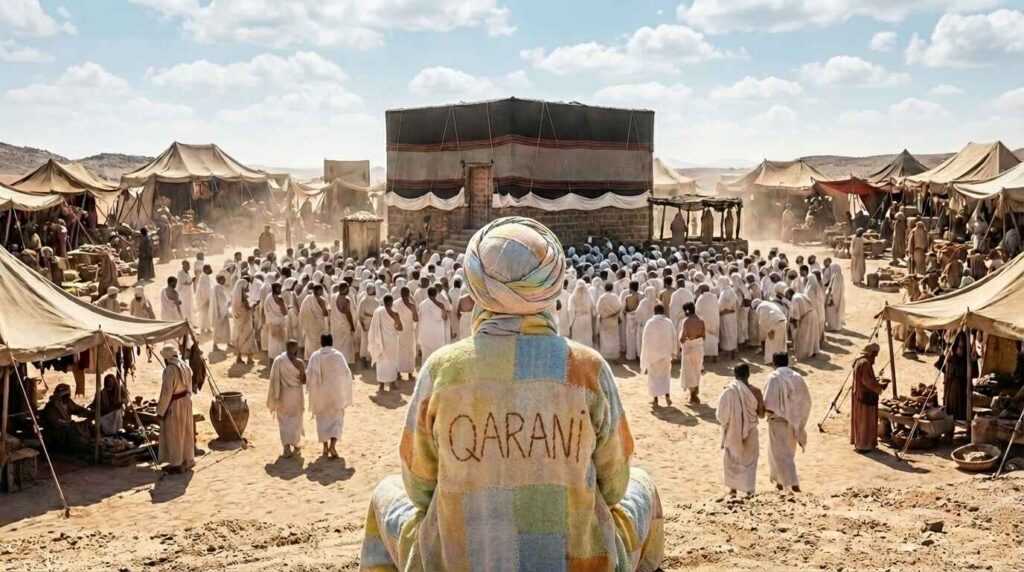
This part of the story is one of the most powerful lessons in Islam: obedience to parents, especially the mother, is so valuable in Allah’s eyes that it can elevate a person to levels of spiritual closeness that even worship and jihad may not automatically guarantee.
Reference: Uwais and His Mother
Primary Source: Sahih Muslim, Hadith 2542. The hadith explicitly states: ‘kana lahu walidatun huwa biha barr’ meaning ‘he had a mother to whom he was very dutiful.’ This line is the foundation for understanding the reason Uwais never came to meet the Prophet (SAW).
Fiqh Reference: The obligation of serving parents is documented in Al-Adab al-Mufrad by Imam al-Bukhari (d. 256 AH / 870 CE), Hadith No. 1, where the Prophet (SAW) places serving parents above voluntary worship. This context helps explain why Uwais’s decision to stay was spiritually correct.
Historical Note: The narration about Uwais traveling to Madinah but not finding the Prophet (SAW) is recorded in Hilyat al-Awliya by Abu Nu’aym al-Isfahani, Vol. 2, p. 81. Abu Nu’aym traces this through a chain that includes Hasan al-Basri (d. 110 AH), one of the most reliable Tabi’in narrators.
The Coin-Sized White Mark: A Sign from Allah
Let us talk about the physical mark on Uwais’s body and what it means in this story.
Uwais had a skin disease that caused white patches across his body. This is referred to in hadith as baras, a form of vitiligo or leprosy affecting skin pigmentation. He prayed sincerely to Allah to heal him from this condition. According to the narration in Sahih Muslim, his prayer was answered and the disease was cured from his entire body, except for one small spot, roughly the size of a dirham (a coin).
Now, why did he leave that one spot? According to Hilyat al-Awliya and other classical sources, it is said that Uwais intentionally asked Allah to leave that one spot as a mark of humility, a reminder of his need for Allah, and perhaps as Allah’s will to make him identifiable for this very moment in history when Umar and Ali would need to find him.
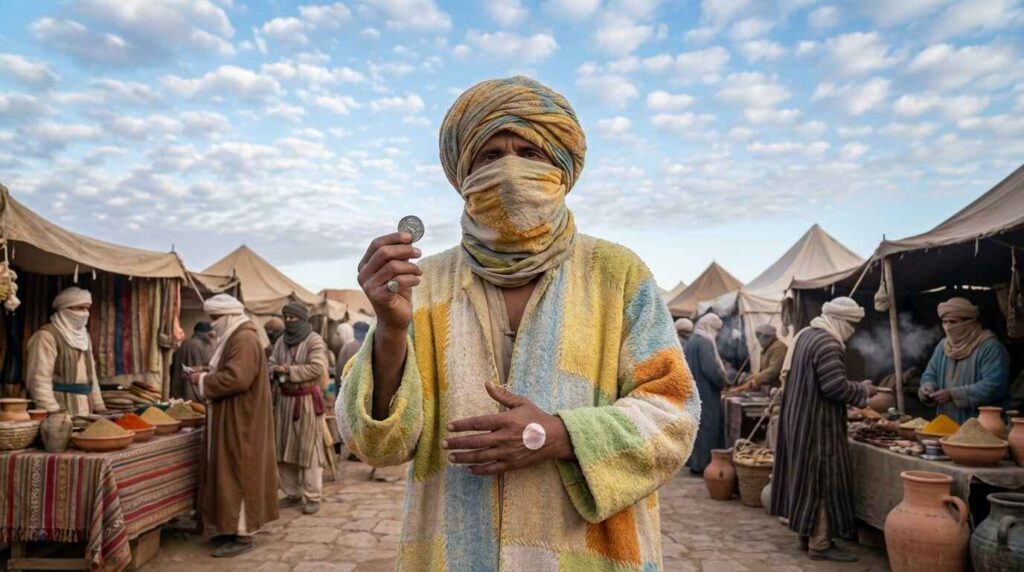
The Prophet (SAW) described this exact mark in his hadith. He told Umar and Ali to look for a man with a coin-sized white spot on his body. This was the identifying sign that confirmed to Umar when he finally met Uwais that this was indeed the man the Prophet (SAW) had spoken about.
Reference: The White Mark
Primary Source: Sahih Muslim, Hadith 2542. The Arabic phrase used is: ‘bih athar al-baras qadr al-dirham’ meaning ‘on him a trace of baras (leprosy/vitiligo) the size of a dirham.’ This is the key identifying description.
Medical/Historical Context: The term ‘baras’ in classical Arabic refers to white skin patches caused by leprosy or vitiligo. Classical scholars like Ibn Hajar al-Asqalani in Fath al-Bari, Vol. 7, p. 104, discuss the terminology.
Spiritual Commentary: Imam al-Nawawi in Sharh Sahih Muslim, Vol. 16, pp. 94-96, discusses why the Prophet (SAW) gave this specific physical description and what it tells us about the precision of prophetic knowledge, which was granted by Allah (wahy).
The Islamic Status of Uwais al-Qarni: What Scholars Say
Uwais al-Qarni is one of the most unique figures in Islamic history. He belongs to a category of people that Islamic scholars have studied and written about extensively. Understanding his religious status helps us appreciate why this story matters so deeply.
Is He a Sahabi (Companion) or a Tabi’i (Successor)?
Uwais is technically classified as a Tabi’i, not a Sahabi. A Sahabi is someone who met the Prophet Muhammad (SAW) with faith and died as a Muslim. Since Uwais never met the Prophet (SAW), he does not hold the title of Sahabi.
However, he is considered one of the greatest of the Tabi’in. Some scholars have argued that his rank before Allah was higher than many Companions, based on the direct testimony of the Prophet (SAW) himself. But this is a matter of spiritual closeness, not formal religious category.
Is He a Wali (Friend of Allah)?
Yes. Without any doubt, classical Islamic scholars classify Uwais al-Qarni as a Wali of Allah. The primary evidence for this is the Prophet’s own statement that if Uwais were to swear an oath by Allah, Allah would fulfill it. This is one of the highest spiritual honors mentioned in hadith literature.
Imam al-Nawawi, one of the greatest hadith scholars in Islamic history, explicitly states in his commentary on Sahih Muslim that Uwais was among the awliya (friends) of Allah, and that his unique status was acknowledged directly by divine revelation to the Prophet (SAW).
Reference: Islamic Status of Uwais
Classification Source: Al-Isabah fi Tamyiz al-Sahabah by Ibn Hajar al-Asqalani (d. 852 AH / 1449 CE), Vol. 1, p. 358. Ibn Hajar discusses Uwais under the category of Tabi’in and confirms he is not a Sahabi but is among the greatest Tabi’in.
Wali Status: Sharh Sahih Muslim by Imam al-Nawawi (d. 676 AH / 1277 CE), Vol. 16, pp. 94-96. Al-Nawawi uses the term ‘min awliya Allah’ (from the friends of Allah) when describing Uwais.
Additional: Siyar A’lam al-Nubala by Imam al-Dhahabi (d. 748 AH / 1348 CE), Vol. 4, pp. 19-28. Al-Dhahabi dedicated a full entry to Uwais al-Qarni, confirming his authenticity and status. He graded the narrations about Uwais as Sahih.
Ranking Among Tabi’in: Imam Ahmad ibn Hanbal reportedly said that Uwais al-Qarni was among the finest of the Tabi’in. This is recorded in Tabaqat al-Huffaz by al-Suyuti (d. 911 AH / 1505 CE), p. 18.
What Happened to Uwais After This Meeting?
After the meeting with Umar and Ali at Hajj, Uwais continued living his quiet life. He was not changed by the encounter in worldly terms. He did not seek fame. He did not use the Prophet’s praise to build a reputation for himself. He remained exactly what he always was: a humble servant of Allah.
Historically, it is recorded that Uwais al-Qarni participated in the Battle of Siffin in 37 AH (657 CE), fighting on the side of Ali ibn Abi Talib (RA) against Muawiyah ibn Abi Sufyan (RA). Islamic historians record that Uwais was martyred in this battle.
If this dating is correct, and most classical scholars accept it, then Uwais died as a shahid (martyr), which is yet another level of honor in Islam. He lived as a hidden saint and died as a martyr. His entire life was one of sacrifice, service, and sincerity.
Reference: His Later Life and Martyrdom
Source on Battle of Siffin: Al-Tabaqat al-Kubra by Ibn Sa’d, Vol. 6, p. 112. Ibn Sa’d records that Uwais al-Qarni was among those who fought at Siffin and was killed there. This places his death in 37 AH (657 CE).
Confirmation: Siyar A’lam al-Nubala by al-Dhahabi, Vol. 4, p. 26. Al-Dhahabi also notes his participation in Siffin and his likely martyrdom, though he notes there is some minor scholarly difference on this point.
Note: Islamic scholars are unanimous that Uwais died during the caliphate of Ali ibn Abi Talib (RA), though the precise battle may differ in some narrations. Al-Dhahabi leans toward Siffin.
Lessons from the Story of Uwais al-Qarni
1. Allah Sees What People Cannot
Uwais was invisible to the world. He was a nobody by the standards of his society. Yet Allah saw his sincerity, his patience, his love for his mother, and his devotion in prayer. Allah honored him in a way that no earthly power could. This is one of the most comforting truths in Islam: you do not need the world to know you. You only need Allah to know you.
2. Serving Your Mother is Not a Small Thing
In modern life, we often treat caring for parents as an obligation we have to manage around our other goals. Uwais’s story tells us it is the other way around. Everything else should be managed around caring for your parents. His devotion to his mother literally earned him a rank that surpassed many of the greatest people of his time.
3. True Greatness is Hidden from the Public Eye
Every great Sufi and Islamic scholar across history has pointed to Uwais as the supreme example of hidden sainthood. He did not lecture. He did not gather followers. He was not on any platform. He just prayed, served, and loved Allah. And Allah chose him over thousands of more ‘visible’ people.
4. The Prophet’s Knowledge Was from Allah
The fact that the Prophet (SAW) described Uwais so precisely, years before anyone had heard of him, is a clear proof of prophetic knowledge granted by Allah (wahy). He knew the man’s tribe, appearance, physical mark, character, and spiritual status. This is one of the miracles of the Prophet’s prophethood.
Reference: Lessons and Their Islamic Basis
On Parental Service: Quran, Surah Al-Isra (17:23-24) commands complete kindness to parents. Sahih al-Bukhari, Hadith 5626 records the Prophet (SAW) saying ‘Ridha al-Rabb fi ridha al-walidayn’ meaning ‘The pleasure of the Lord is in the pleasure of the parents.’
On Hidden Sainthood: Imam al-Ghazali in Ihya Ulum al-Din (Revival of Religious Sciences), Vol. 4, pp. 320-330, uses Uwais as a primary example when discussing the concept of hidden spiritual rank (khafa).
On Prophetic Knowledge: Fath al-Bari by Ibn Hajar al-Asqalani, Vol. 7, p. 104, discusses how the precise description of Uwais given by the Prophet (SAW) is evidence of prophetic miracle (mu’jiza).
Frequently Asked Questions (FAQs)
Is the story of Uwais al-Qarni authentically proven in Islam?
Yes. The core story of Uwais al-Qarni is narrated in Sahih Muslim (Hadith 2542), which is one of the two most authentic hadith collections in Sunni Islam. It is also supported by narrations in Jami al-Tirmidhi, Musnad Ahmad, and classical biographical works like Al-Tabaqat al-Kubra by Ibn Sa’d and Hilyat al-Awliya by Abu Nu’aym. Imam al-Nawawi and Imam al-Dhahabi both confirmed the authenticity of the narration. There is no major scholarly dispute over the authenticity of this story in its core form.
Why did the Prophet (SAW) tell Umar and Ali to ask Uwais for prayers, when they were greater in rank?
This is a beautiful question. The Prophet (SAW) did not mean to suggest that Uwais was greater than his Companions in religious knowledge or sacrifice for Islam. Rather, he was pointing to a specific type of spiritual station: the accepted prayer (du’a mustajab). Uwais had reached a level of sincerity and connection with Allah where his prayers were especially accepted. The Prophet (SAW) wanted his Companions and his Ummah to benefit from this. As Imam al-Nawawi explains, seeking prayers from righteous people is encouraged in Islam, and this hadith is one of the proofs for that practice.
Why is Uwais al-Qarni considered so important if he was not a Companion?
Because his greatness did not come from being near the Prophet (SAW) physically. It came from being near Allah spiritually. The Prophet (SAW) himself vouched for his status. This story teaches Muslims that divine closeness is not limited to a particular era or social circle. It is available to anyone who sincerely worships Allah, fulfills their duties to their family, and lives with humility and love for their Lord.
What can modern Muslims learn from Uwais al-Qarni for their daily lives?
The most practical lessons are these: First, do not underestimate the spiritual power of serving your parents, especially your mother. Second, do not seek recognition for your good deeds. The most powerful worship is often invisible to others. Third, trust that Allah sees your sacrifice even when the world does not. Fourth, make sincere, humble du’a (prayer). Uwais’s prayers moved mountains not because he was famous, but because he was sincere. His entire life is a reminder that in Islam, the true measure of a person is their relationship with Allah, not their fame among people.
Key Islamic Sources Referenced in This Article
1. Sahih Muslim – Imam Muslim ibn al-Hajjaj (d. 261 AH / 875 CE) | Hadith 2542
2. Jami al-Tirmidhi – Imam Abu Isa al-Tirmidhi (d. 279 AH / 892 CE) | Hadith 3861
3. Al-Tabaqat al-Kubra – Muhammad ibn Sa’d (d. 230 AH / 845 CE) | Vol. 6, pp. 104-112
4. Hilyat al-Awliya – Abu Nu’aym al-Isfahani (d. 430 AH / 1038 CE) | Vol. 2, pp. 79-87
5. Sharh Sahih Muslim – Imam al-Nawawi (d. 676 AH / 1277 CE) | Vol. 16, pp. 94-96
6. Al-Isabah fi Tamyiz al-Sahabah – Ibn Hajar al-Asqalani (d. 852 AH / 1449 CE) | Vol. 1, p. 358
7. Siyar A’lam al-Nubala – Imam al-Dhahabi (d. 748 AH / 1348 CE) | Vol. 4, pp. 19-28
8. Musnad Ahmad ibn Hanbal (d. 241 AH / 855 CE) | Vol. 1, p. 337
9. Usd al-Ghabah – Ibn al-Athir (d. 630 AH / 1233 CE) | Vol. 1, pp. 177-178
10. Fath al-Bari – Ibn Hajar al-Asqalani (d. 852 AH / 1449 CE) | Vol. 7, p. 104
11. Ihya Ulum al-Din – Imam al-Ghazali (d. 505 AH / 1111 CE) | Vol. 4, pp. 320-330
12. Al-Adab al-Mufrad – Imam al-Bukhari (d. 256 AH / 870 CE) | Hadith No. 1
Note: No Israeli (Isra’iliyyat) narrations have been used in this article. All sources are from authenticated Sunni hadith collections and classical Islamic scholarship. Where scholars have expressed minor differences, those have been noted transparently.