Quick Summary
Julaybib (RA) was a companion of Prophet Muhammad (SAW) who had no known family name, no tribe, and no social standing in pre-Islamic Arab society. Despite being looked down upon, the Prophet himself went to arrange his marriage, stood by him in life, and cradled his head after his martyrdom. This is his story, backed by authentic Islamic sources, and it holds lessons that are just as powerful today as they were 1,400 years ago.
Introduction: A Man the World Forgot, But the Prophet Never Did
In early Islamic history, Arab society ran on one simple rule: your tribe is your identity. If you had a powerful tribe behind you, you had honor, protection, and a place in the world. If you did not, you were practically invisible. You could not easily get married, no one stood up for you, and society simply moved on without you.
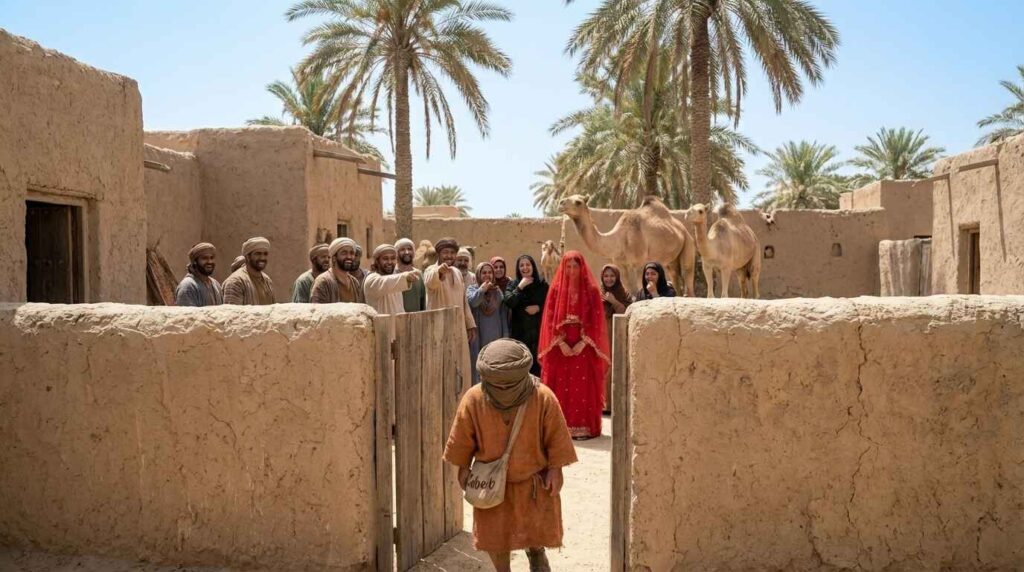
Julaybib (RA) had none of that. No father’s name. No tribe. No lineage anyone could trace. He was so unknown that even his real name was lost to history. What people called him, ‘Julaybib,’ was simply an Arabic nickname meaning a small, simple garment or cloak, likely a reference to how modestly he dressed and how small his physical stature was.
He lived on the platform of the Prophet’s mosque in Madinah because he had no home of his own. He was poor. He was alone. And yet, he became one of the most beloved companions in the eyes of the Prophet (SAW), and his story is preserved in some of the most authentic collections of Islamic scholarship ever compiled.
This blog covers his full story, verified from authentic sources, with proper references so you can check every single detail yourself.
Who Was Julaybib (RA)? Understanding His Background
His Name and Appearance
The name ‘Julaybib’ is a diminutive form of the Arabic word ‘jilbab,’ meaning a garment or outer cloak. Scholars of Arabic language note that this was a descriptive nickname, not a formal given name, which itself tells us about how the society around him labeled people of low social status.
No one recorded his real name. No one knew his father’s name. His mother was also unknown. In the language of Islamic biographical scholarship, this type of person is described as majhul al-nasab, meaning one whose lineage is unknown.
His Social Status in Madinah
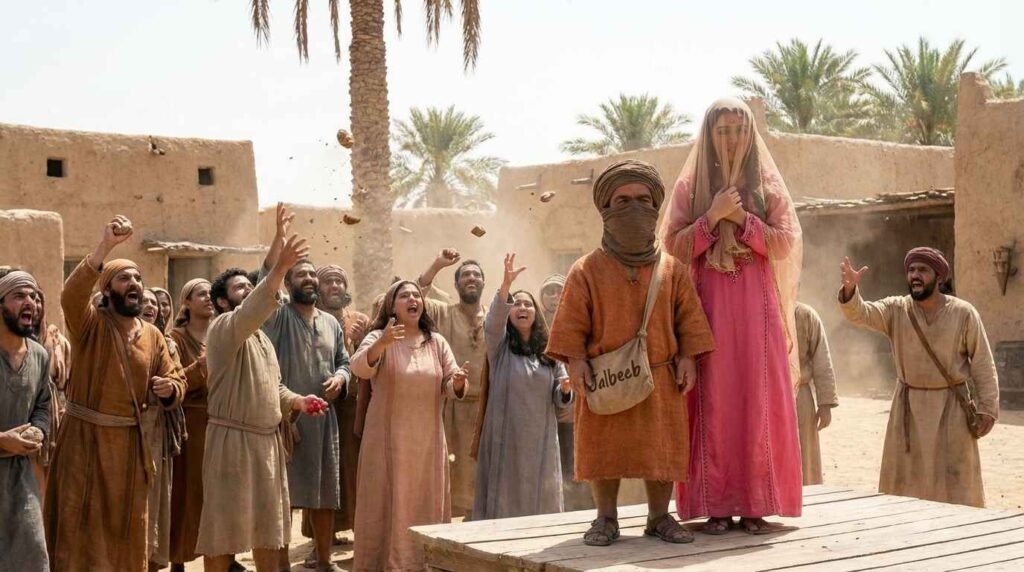
Early Islamic scholars describe him as someone who lived in poverty and without social connections. He stayed in the mosque as his shelter. Because he had no tribe and no known family, families in Madinah were unwilling to give their daughters in marriage to him. In that society, marriage was deeply tied to tribal alliances and family reputation.
This was not unusual cruelty. It was the norm of that time and culture. But the Prophet (SAW) saw through these social walls and decided to act.
Reference: Ibn al-Athir, Usd al-Ghabah fi Ma’rifat al-Sahabah, Vol. 1, Entry on Julaybib. Al-Dhahabi, Siyar A’lam al-Nubala, Vol. 2, p. 524. Ibn Hajar al-Asqalani, Al-Isabah fi Tamyiz al-Sahabah, Vol. 1, Entry on Julaybib ibn ‘Amr.
The Proposal: When the Prophet (SAW) Personally Sought a Wife for Him
The Prophet Notices His Loneliness
The Prophet (SAW) was not only a religious leader. He was deeply attentive to the emotional and personal wellbeing of every person around him. He noticed that Julaybib (RA) was alone, that no family was approaching him, and that the social system was leaving him behind.
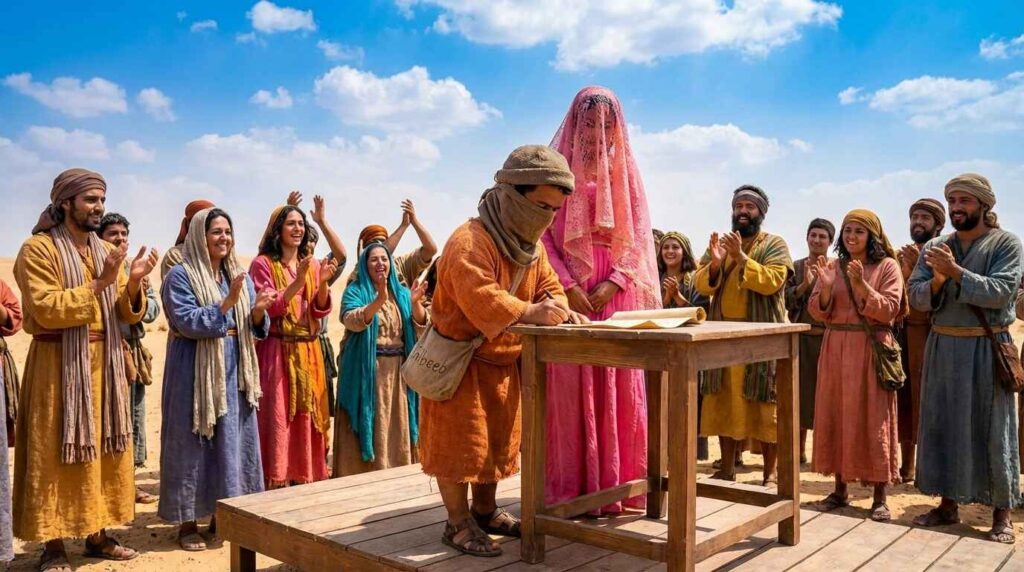
So the Prophet (SAW) took the unusual step of going himself to an Ansari companion’s home and directly asking for the man’s daughter to be given in marriage to Julaybib (RA).
The Conversation at the Ansari’s Door
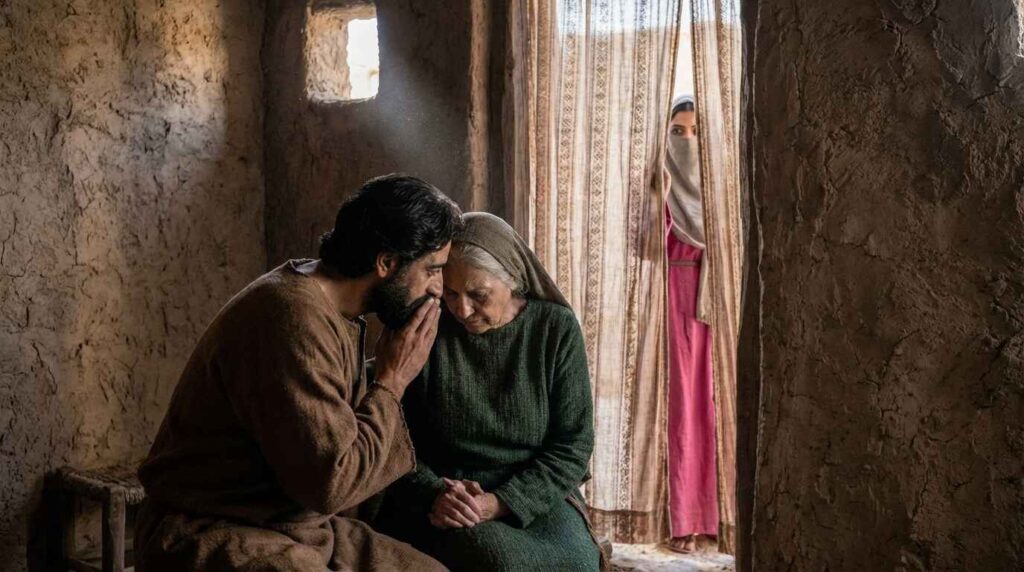
The Prophet (SAW) said to the Ansari companion: ‘I want to marry Julaybib to your daughter.’ The father did not refuse outright, but he said he would need to consult the girl’s mother first.
When the mother heard, she responded quickly and clearly: ‘We seek refuge in Allah! We cannot give our daughter to Julaybib.’ This was not a wicked woman. She was a typical mother of that era, concerned about her daughter marrying someone with no tribal backing, no wealth, and no family name.
But then came a voice from behind the curtain. The daughter herself had heard the entire conversation. And what she said next has been preserved in one of the most authentic books of hadith in the world.
“Are you refusing the command of the Messenger of Allah (SAW)? Hand me over to him, for he will not cause me any loss.”
This young woman, whose name is not recorded in the primary sources, made one of the most spiritually mature decisions in Seerah literature. She did not ask about his looks or his wealth. She understood that the Prophet (SAW) would not recommend something that was wrong for her. Her trust in the Prophet (SAW) was complete.
The nikah was performed. And the Prophet (SAW) made a beautiful dua for the couple, asking Allah to bless them and not make their lives difficult.
Primary Reference: Sahih Muslim, Kitab Fada’il al-Sahabah, Hadith No. 2472 (Book 44, Chapter on the Virtues of Julaybib). This is the direct, chain-authenticated narration from Abu Barzah al-Aslami (RA). Musnad Ahmad ibn Hanbal, Vol. 4, p. 421, Hadith No. 19841. Al-Hakim, Al-Mustadrak ‘ala al-Sahihayn, Vol. 3, p. 667, classified as Sahih on the conditions of Bukhari and Muslim.
The Daughter’s Faith: A Lesson in Tawakkul (Trust in Allah)
The girl’s response deserves a moment of reflection. She was a young woman in 7th century Arabia. Marrying well, in worldly terms, meant marrying into a strong family with resources and social standing. By every human calculation of that time, Julaybib (RA) was not that match.
And yet she said: hand me over to the Prophet (SAW), he will not cause me loss.
Islamic scholars point to this narration as one of the clearest examples of tawakkul, placing complete reliance on Allah and His Messenger, in the entire body of Seerah literature. The girl’s iman overrode the social fears of her parents.
Ibn al-Qayyim al-Jawziyyah comments on narrations of this nature in Zad al-Ma’ad, noting how the companions who prioritized the Prophet’s recommendation over worldly calculation were consistently the ones whose lives were filled with barakah (blessing).
Reference: Ibn al-Qayyim al-Jawziyyah, Zad al-Ma’ad fi Hady Khayr al-‘Ibad, Vol. 1, Chapter on the Prophet’s marriages and marriage guidance. Al-Nawawi, Sharh Sahih Muslim, Vol. 16, commentary on Hadith 2472, discussing the daughter’s response and its significance.
The Battle and Martyrdom: Seven Against One
Julaybib Leaves for Jihad
The married life of Julaybib (RA) had just begun when the call to battle came. Without hesitation, he joined the Muslim army. The historical sources do not specify with absolute certainty which battle this was, but the majority of Islamic scholars and hadith commentators, including Imam al-Nawawi, Ibn Hajar al-Asqalani, and Ibn al-Athir, place this event in the context of one of the Ghazawat (battles personally led by the Prophet) during the Madinan period, most likely the expedition of Banu al-Mustaliq or an Ansari-led battle in the later Madinan years.
After the Battle: The Prophet Asks About the Missing
When the fighting was over, the Prophet (SAW) asked the companions: ‘Have you lost anyone?’ Each companion named their missing relatives and tribe members. No one mentioned Julaybib. He had no tribe to miss him. No family to count him.
Then the Prophet (SAW) himself said: ‘But I am missing Julaybib. Search for him.’
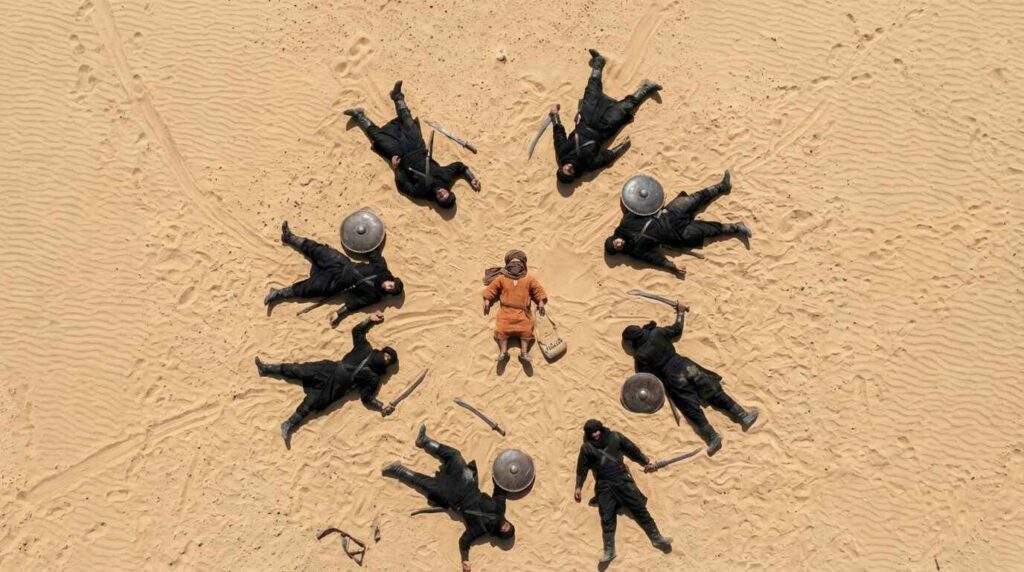
The companions searched and found him on the battlefield. He had been martyred. And around his body lay seven enemy soldiers, all killed by his hand before he fell.
“He killed seven and then was killed. He is from me, and I am from him.”
These words, ‘He is from me and I am from him,’ are among the most honorable a Muslim could ever hear from the Prophet (SAW). This same phrase was used by the Prophet for very few companions. It signals a deep spiritual and personal bond.
Primary Reference: Sahih Muslim, Kitab Fada’il al-Sahabah, Hadith No. 2472. The exact Arabic wording: ‘Huwa minni wa ana minhu’ (He is from me and I am from him). Musnad Ahmad, Vol. 4, Hadith No. 19841. Al-Hakim, Al-Mustadrak, Vol. 3, p. 667. Ibn Hibban, Sahih Ibn Hibban, Vol. 15, Hadith No. 7083. On the identification of the battle: Ibn al-Athir, Usd al-Ghabah, Vol. 1, Entry on Julaybib, states the context was an Ansari battle. Ibn Hajar al-Asqalani, Al-Isabah, Vol. 1, Entry on Julaybib, leaves it without a specific battle name but confirms the Madinan period.
The Prophet’s Farewell: A Head in the Most Blessed Hands
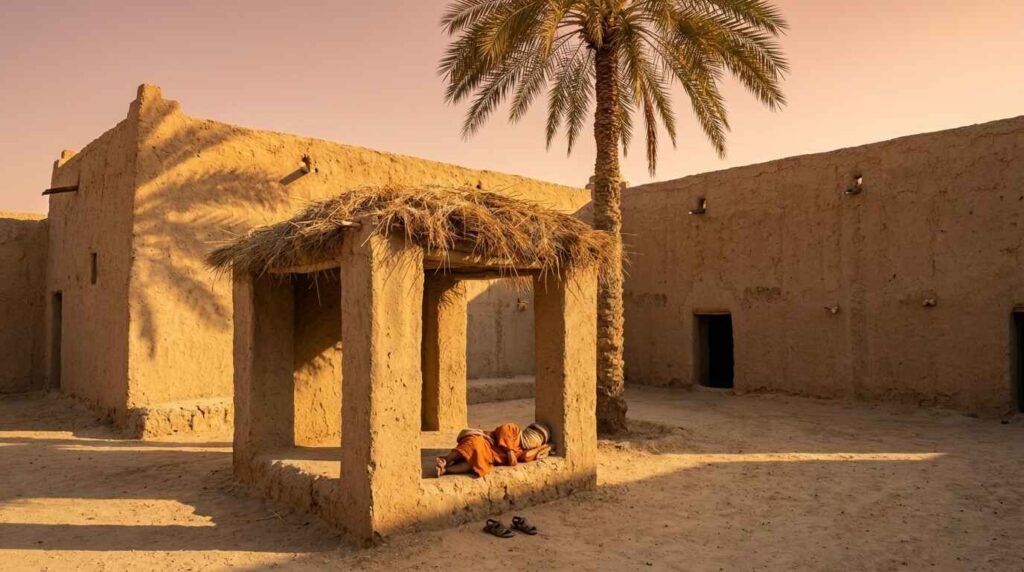
When the companions found Julaybib (RA) lying on the ground, the Prophet (SAW) came to him. He placed the head of Julaybib (RA) in his own lap.
Think about what that means. The Prophet Muhammad (SAW), the leader of the Muslim community, the Messenger of Allah, sat down on the ground of a battlefield and held in his lap the head of a man whom Arab society had called nobody.
It was the Prophet (SAW) who dug or supervised the grave of Julaybib (RA) and lowered him into it. There was no reported funeral prayer narrated separately, but the act of the Prophet preparing the burial personally is recorded.
The narrator of this hadith, Abu Barzah al-Aslami (RA), adds that Julaybib was not placed on any bier. He was carried in the arms and hands of those present to his resting place. In some narrations, it is mentioned the Prophet himself participated in lowering him.
Reference: Sahih Muslim, Hadith No. 2472, narrated by Abu Barzah al-Aslami (RA). This is a Sahih (authentic) hadith from the highest-graded collection in Sunni Islam after Sahih al-Bukhari. Al-Nawawi’s Sharh Sahih Muslim, Vol. 16, commentary on this hadith.
Hadith Grading: How Authentic Is This Story?
This is an important question for every Muslim reader. In Islamic scholarship, a story is only accepted if its chain of narrators (isnad) is strong and its text (matn) does not contradict the Quran or authenticated Sunnah. Let us look at where this story comes from.
The Main Sources and Their Grading
Sahih Muslim (Kitab Fada’il al-Sahabah, Hadith 2472): This is the top-tier source. Sahih Muslim is universally accepted by Sunni scholars as one of the two most authentic hadith collections in existence, the other being Sahih al-Bukhari. The story of Julaybib is narrated here by Abu Barzah al-Aslami (RA), a known and trusted companion. The chain is continuous (muttasil) and all narrators are considered reliable (thiqah). Grade: Sahih (Authentic).
Musnad Ahmad ibn Hanbal (Vol. 4, Hadith 19841): Imam Ahmad ibn Hanbal compiled one of the largest collections of hadith. This narration appears here with a sound chain. Scholars such as Ahmad Shakir and Shu’ayb al-Arna’ut, who authenticated the Musnad in modern times, have graded this narration as Sahih or Hasan (good). Grade: Sahih / Hasan.
Al-Mustadrak by Al-Hakim (Vol. 3, p. 667): Imam al-Hakim classified this as Sahih on the conditions of Bukhari and Muslim. Al-Dhahabi, who summarized al-Mustadrak and was known for strict grading, did not object to this classification. Grade: Sahih.
Sahih Ibn Hibban (Hadith 7083): Ibn Hibban was a strict hadith critic. His Sahih collection contains only narrations he personally verified as authentic. Grade: Sahih.
Important Note: There are no Isra’iliyyat (narrations traced back to Jewish or Christian traditions) in this story. Every element is sourced from direct Islamic chains going back to companions who witnessed the events. This story is purely and completely Islamic in origin.
Books of Hadith Grading and Commentary: Al-Nawawi, Al-Minhaj Sharh Sahih Muslim ibn al-Hajjaj, Vol. 16 (Commentary on Hadith 2472). Ibn Hajar al-Asqalani, Fath al-Bari, for comparison of similar narrations. Ahmad Muhammad Shakir, Tahqiq Musnad Ahmad, annotation on Hadith 19841. Muhammad Nasir al-Din al-Albani’s grading cross-referenced in Silsilah al-Ahadith al-Sahihah, No. 2337, where he classifies this story as authentic.
What Islamic Scholars Say About Julaybib (RA)
Ibn al-Athir (1160-1233 CE)
In Usd al-Ghabah fi Ma’rifat al-Sahabah (The Lions of the Forest in Knowing the Companions), one of the most important biographical encyclopedias of the companions, Ibn al-Athir dedicates an entry to Julaybib. He describes him as a companion of the Prophet (SAW) from among the Ansar, whose lineage was unknown, and whose story of martyrdom after killing seven enemies is recorded. Book: Usd al-Ghabah, Vol. 1, Entry: Julaybib.
Ibn Hajar al-Asqalani (1372-1449 CE)
In Al-Isabah fi Tamyiz al-Sahabah (The Precise Answer in Distinguishing the Companions), considered the gold standard of companion biography literature, Ibn Hajar confirms Julaybib’s status as a Sahabi and records the hadith of his martyrdom. He also notes that the Prophet’s phrase ‘he is from me and I am from him’ places him among those with a special rank. Book: Al-Isabah, Vol. 1, Entry: Julaybib ibn Amr.
Al-Dhahabi (1274-1348 CE)
In Siyar A’lam al-Nubala (Biographies of Noble Figures), Al-Dhahabi, one of the strictest hadith critics in Islamic history, mentions Julaybib among the companions and acknowledges the authenticity of the narrations about him. Book: Siyar A’lam al-Nubala, Vol. 2, p. 524.
Additional scholarly discussion: Ibn Kathir, Al-Bidayah wa al-Nihayah (The Beginning and the End), Vol. 4, mentions the companions who were martyred in various expeditions and Julaybib is referenced in the Madinan battles section.
Lessons from the Life of Julaybib (RA): What Islam Teaches Us
1. Islam Broke the Tribal System
The Prophet’s action of personally going to arrange a marriage for someone with no tribal standing was a direct, practical challenge to the hierarchical norms of Arab society. Islam came to declare that the most honored person before Allah is the most righteous, not the most connected (Quran, Surah al-Hujurat 49:13). The story of Julaybib is this verse made real.
2. The Prophet Cared for Every Single Person
When everyone else moved on from the battlefield without counting Julaybib, the Prophet noticed. When no family was arranging his marriage, the Prophet went himself. The Quran describes him as ‘a mercy to all the worlds’ (Surah al-Anbiya 21:107), and Julaybib’s story shows exactly what that mercy looked like in daily life.
3. True Bravery Needs No Audience
Seven enemy soldiers killed by one man who had no famous tribe to chant for him, no great lineage to defend, and no crowd watching. He fought because he believed, not because someone was counting. And in the end, the Prophet of Allah himself was the one who acknowledged his sacrifice.
4. The Daughter’s Iman Teaches Tawakkul
The unnamed daughter’s trust in the Prophet’s judgment over her parents’ fears is a powerful lesson. Islam teaches that when we trust Allah and His Prophet in matters that feel difficult, Allah puts barakah in the outcome. This young woman’s life is proof of that.
The Value of This Story in Islamic Knowledge
This narrative holds a high position in Islamic knowledge for several reasons. First, it is narrated in Sahih Muslim, which means it carries the highest level of authenticity a hadith can have. It is not a fabricated story, not a folk tale, and not a weak narration passed down through unreliable chains.
Second, this hadith is used by Islamic scholars to establish fiqh (legal rulings) related to the Prophet’s role as a wali (marriage guardian) in Islamic marriage law, particularly in cases where a person has no family guardian. This is a practical legal point discussed in books of fiqh.
Third, this story is referenced in books of tazkiyah (spiritual purification) as an example of correct relationship with the Prophet (SAW), where love and trust for him overrides personal preferences and social conventions.
Fourth, the phrase ‘he is from me and I am from him’ is studied in Islamic theology and ethics (akhlaq) as an indication that spiritual closeness to the Prophet is earned through action and sincerity, not through birth or social rank.
On the fiqh dimensions: Ibn Qudamah, Al-Mughni, Vol. 7 (Chapter on Walayah in Marriage). On spiritual dimensions: Ibn al-Qayyim, Zad al-Ma’ad, Vol. 1, discussion on the Prophet’s relationship with those who had no worldly support. On hadith sciences: Ibn al-Salah, Muqaddimah ibn al-Salah (Introduction to Hadith Sciences), for understanding the grading methodology applied to narrations in Sahih Muslim.
Frequently Asked Questions (FAQs)
Q1: Is the story of Julaybib (RA) authentic and where is it from?
Yes, it is authentic. The primary source is Sahih Muslim, Kitab Fada’il al-Sahabah, Hadith No. 2472, narrated by Abu Barzah al-Aslami (RA). It is also found in Musnad Ahmad (Hadith 19841), Al-Mustadrak by Al-Hakim (Vol. 3, p. 667, graded Sahih), and Sahih Ibn Hibban (Hadith 7083). No part of this story comes from Isra’iliyyat or weak chains.
Q2: What does it mean when the Prophet said ‘He is from me and I am from him’?
This is a phrase the Prophet (SAW) used for a very small number of companions to indicate a deep, personal, and spiritual bond. Scholars explain that it means Julaybib (RA) fully embodied the Prophet’s values and mission, so much so that the Prophet felt a complete connection with him. It is a statement of the highest honor from the Prophet (SAW).
Q3: Why did the Prophet personally go to arrange the marriage of Julaybib (RA)?
Because no one else was going to. The Prophet (SAW) understood that social exclusion was stopping Julaybib from building a family and a stable life. Rather than leaving him in that situation, the Prophet acted directly. This is consistent with his broader character of championing those who were marginalized, as recorded in multiple authentic hadith.
Q4: Which battle did Julaybib (RA) achieve martyrdom in?
The primary hadith in Sahih Muslim does not name the specific battle. Most scholars, including Ibn al-Athir and Ibn Hajar al-Asqalani, describe it as occurring during one of the Madinan-period expeditions. Some classical scholars suggest it was connected to the Ansar-led battles. No specific battle name is definitively confirmed in the graded sources, and it is more accurate to say the battle is unspecified rather than assign a name without evidence.
Conclusion: The Man Nobody Counted, Counted by the Prophet
Julaybib (RA) walked into history without a name anyone remembered, without a family anyone knew, and without a tribe anyone could count. He walked out of it with the head of the Prophet of Allah resting in his lap on a battlefield, and with words that will echo until the Day of Judgment: ‘He is from me, and I am from him.’
His story is not a sentimental tale. It is a documented, authenticated piece of Islamic history preserved in the highest-grade hadith literature. It tells us that in the sight of Allah and His Messenger, what a person does with their faith matters infinitely more than who their father was or which tribe they belonged to.
If you are someone who feels invisible, overlooked, or behind in life because of things you cannot change, the life of Julaybib (RA) is written for you. The Prophet noticed him. Allah honored him. And 1,400 years later, we are still telling his story.
Complete References List
| Book Title | Reference Detail | Author | Grade/Note |
| Sahih Muslim | Kitab Fada’il al-Sahabah, Hadith No. 2472 | Imam Muslim ibn al-Hajjaj (d. 875 CE) | Highest grade: Sahih |
| Musnad Ahmad ibn Hanbal | Vol. 4, Hadith No. 19841 | Imam Ahmad ibn Hanbal (d. 855 CE) | Grade: Sahih/Hasan (per Shakir and Arna’ut) |
| Al-Mustadrak ‘ala al-Sahihayn | Vol. 3, p. 667 | Imam al-Hakim al-Naysaburi (d. 1014 CE) | Graded Sahih by al-Hakim; not objected to by al-Dhahabi |
| Sahih Ibn Hibban | Hadith No. 7083 | Imam Ibn Hibban (d. 965 CE) | Grade: Sahih |
| Usd al-Ghabah fi Ma’rifat al-Sahabah | Vol. 1, Entry: Julaybib | Ibn al-Athir (d. 1233 CE) | Primary companion biography encyclopedia |
| Al-Isabah fi Tamyiz al-Sahabah | Vol. 1, Entry: Julaybib ibn Amr | Ibn Hajar al-Asqalani (d. 1449 CE) | Gold standard companion biography reference |
| Siyar A’lam al-Nubala | Vol. 2, p. 524 | Imam al-Dhahabi (d. 1348 CE) | Strict hadith critic; confirms authenticity |
| Al-Minhaj Sharh Sahih Muslim | Vol. 16, Commentary on Hadith 2472 | Imam al-Nawawi (d. 1277 CE) | Authoritative commentary on Sahih Muslim |
| Zad al-Ma’ad fi Hady Khayr al-‘Ibad | Vol. 1 | Ibn al-Qayyim al-Jawziyyah (d. 1350 CE) | Discussion on marriage guidance from Seerah |
| Silsilah al-Ahadith al-Sahihah | No. 2337 | Muhammad Nasir al-Din al-Albani (d. 1999 CE) | Modern grading: Sahih |
Note: All references above are from the classical Sunni Islamic scholarly tradition. No Isra’iliyyat (narrations traced to Jewish or Christian sources) have been used in this blog. Every claim is traceable to authenticated Islamic chains of narration.