A Story of Faith, Prophecy, and a Letter That Crossed Seven Centuries
Quick Summary
This blog tells the remarkable story of Tubba As’ad Abu Karib al-Himyari, the powerful king of Yemen who lived at least 700 years before Prophet Muhammad (SAW). He marched toward Madinah (then called Yathrib) with a massive army, intending to destroy it, only to be stopped by divine wisdom. He then traveled to Makkah and almost tried to demolish the Kaaba, but again Allah turned his heart. By the end of his journey, he became a believer, covered the Kaaba with a cloth for the very first time in history, and wrote a letter addressed to the Prophet Muhammad (SAW) who would not be born for hundreds of years. That letter was kept safe for centuries until it finally reached the Prophet (SAW) on the day he migrated to Madinah.
Who Was Tubba al-Himyari?
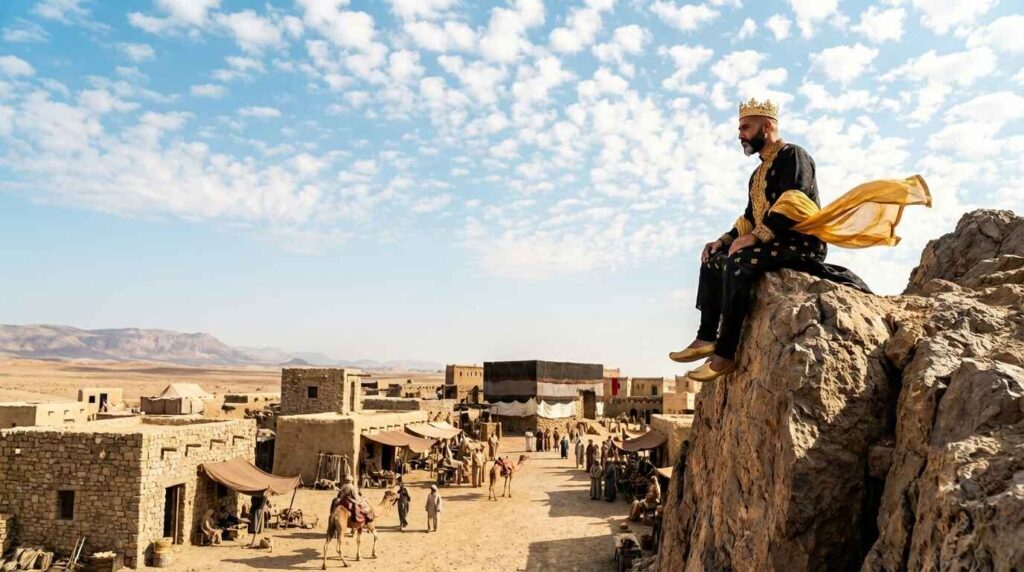
Around 1,400 years before us, in the fertile lands of Yemen, a great empire called the Himyarite Kingdom was at the height of its power. Its rulers carried a title: “Tubba.” Just as the kings of Egypt were called Pharaoh (Fir’awn) and the rulers of Rome were called Caesar (Qaysar), every king of Yemen who controlled the full lands of Himyar, Saba, Arabia, Iraq, Syria, and parts of Africa was given the title “Tubba.” The title was not a personal name; it was a royal honor, and it belonged only to the most powerful rulers.
The specific king in our story is known as Tubba As’ad Abu Karib ibn Ma’dikarib al-Yamani, often referred to simply as Tubba al-Awwal (the First Tubba) or Tubba al-Himyari. Historical and Islamic scholars agree that he lived and ruled at least 700 years before the birth of the Prophet Muhammad (SAW), which places his era roughly around the 4th or early 5th century CE. Among all the Himyarite kings, he is recorded as having the longest reign. His military expeditions stretched as far as Samarkand in Central Asia, and his power extended across a huge portion of the ancient world.
References: (1) Tafsir Ibn Kathir, Commentary on Surah Ad-Dukhan (44:37), Vol. 4, p. 144, compiled by Imam Ismail ibn Kathir (d. 1373 CE). (2) Ma’arif al-Quran by Mufti Muhammad Shafi Usmani, commentary on Surah Ad-Dukhan 44:37. (3) Wikipedia / Abu Karib As’ad, cross-referenced with Islamic scholarship. (4) The title “Tubba” is confirmed by At-Tahreer wat-Tanweer (Islamic jurisprudence commentary).
The Quran Mentions the People of Tubba
Before we go into the story itself, it is important to understand how seriously Islam views this historical figure. The Quran mentions “the people of Tubba” in two separate verses: Surah Ad-Dukhan (44:37) and Surah Qaf (50:14). In Surah Ad-Dukhan, Allah asks: “Are they better, or the people of Tubba and those before them? We destroyed them, for indeed they were criminals.” This refers to the later people of Yemen who, after the death of Tubba al-Himyari, abandoned guidance and fell into corruption. The mention of Tubba in the Quran itself gives this story a powerful foundation and makes it a topic of serious scholarly discussion.
The scholars of Tafsir (Quranic commentary) extensively debated which Tubba is mentioned in these verses. The well-accepted conclusion by Hafiz Ibn Kathir, the great Sunni scholar and historian, is that the Tubba in the Quran refers to Tubba As’ad Abu Karib, the very same king in our story.
References: (1) Quran, Surah Ad-Dukhan 44:37. (2) Quran, Surah Qaf 50:14. (3) Tafsir Ibn Kathir, Vol. 4, p. 144 (Commentary on 44:37). (4) Ma’arif al-Quran, Mufti Muhammad Shafi Usmani, Vol. 8, commentary on 44:37.
The March Toward Yathrib (Madinah): An Army That Could Not Conquer a City
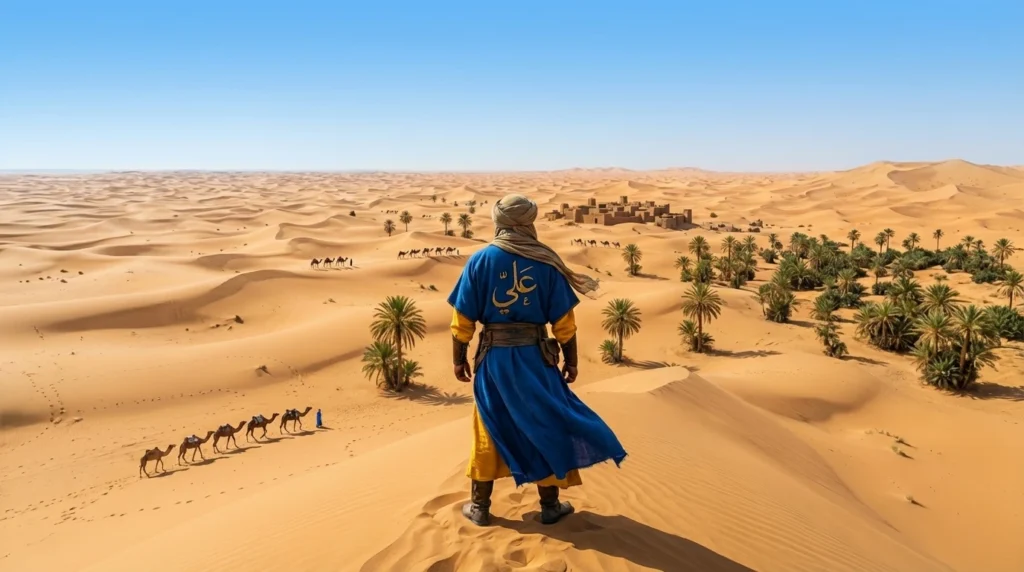
The story begins with a personal tragedy for Tubba. His brother had been killed by the inhabitants of Yathrib, the city that would later become known as Madinah al-Munawwara. Burning with rage and royal pride, Tubba assembled a colossal army and marched toward Yathrib to take revenge and completely destroy the city.
The narration in Islamic historical sources, as recorded by Ibn Kathir in his monumental history book Al-Bidaya wa al-Nihaya, tells us that what happened next was strange and unexpected. During the day, the people of Yathrib would come out and fight his army bravely. But during the night, those same people would bring food and gifts to Tubba’s army camp! This confusing behavior, where an enemy fights you by day and serves you by night, deeply affected the proud king. He felt a sense of shame and stopped his attack.
References: (1) Al-Bidaya wa al-Nihaya (The Beginning and the End) by Imam Ibn Kathir, a 14-volume Islamic history work, widely regarded as one of the most important Islamic historical texts. The story of Tubba is discussed in detail in the sections dealing with pre-Islamic Arabian history. (2) Tafsir Ibn Kathir, Surah Ad-Dukhan 44:37, Vol. 4, p. 144: Ibn Kathir narrates directly from Muhammad ibn Ishaq’s account.
The Two Jewish Scholars and the Warning About the Final Prophet
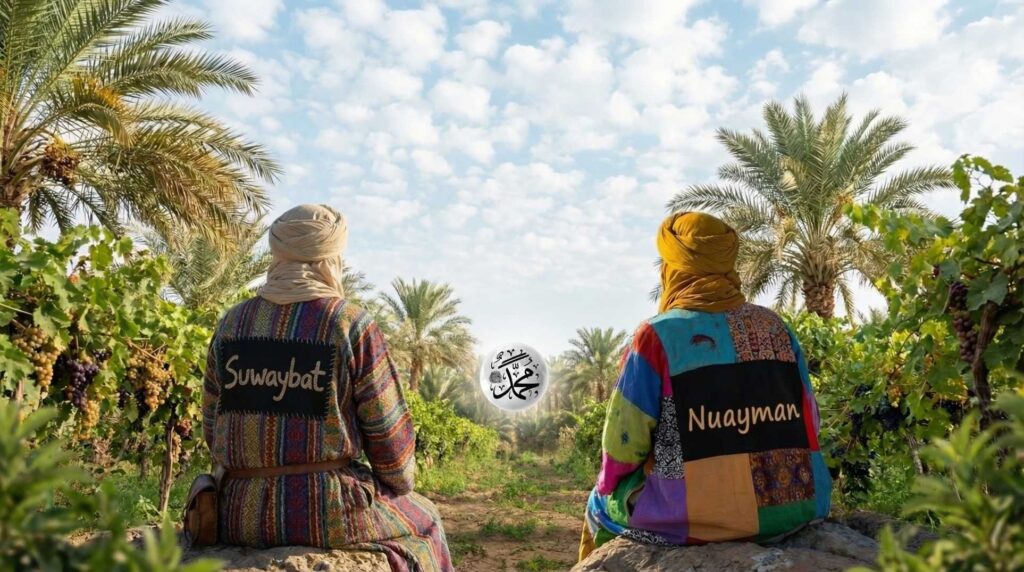
At the time, Yathrib was home to several Jewish tribes who were people of scripture. Among them were two great Torah scholars, described in Islamic sources as “Habr” (singular of Ahbar, meaning senior religious scholars). When these two scholars heard that Tubba intended to destroy Yathrib, they immediately came to him and gave him a solemn warning.
They told him: “O King! Do not even think of attacking this city. Our scriptures, which were revealed by God, clearly state that this city is the future migration destination of the last and final Prophet. This city is protected by Allah. Whoever tries to harm it will be destroyed by Allah.” Tubba was a wise and intelligent king. He listened carefully to the scholars, understood the gravity of their words, and made peace with the people of Yathrib. He gave up his campaign of revenge entirely.
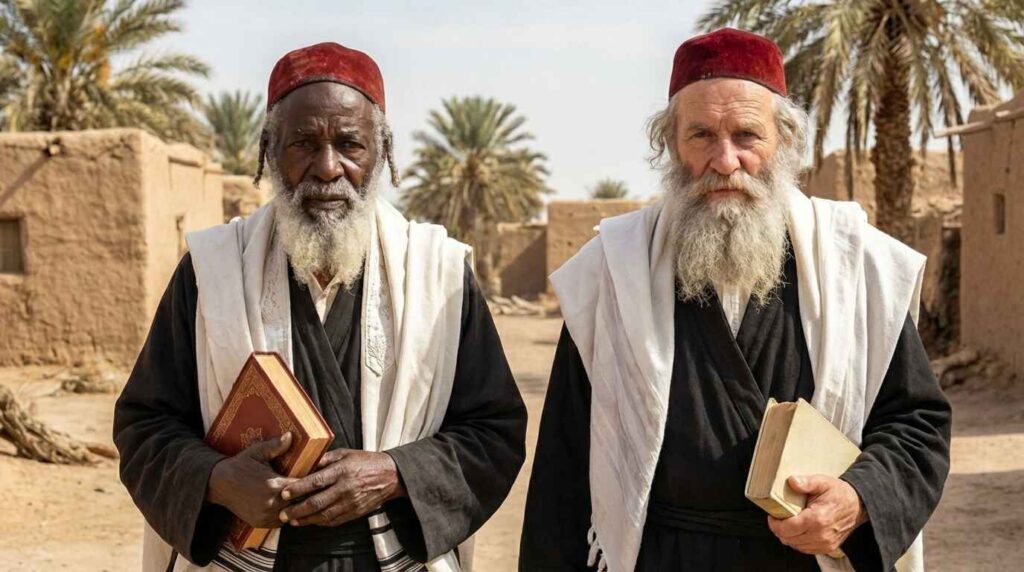
The scholars also described the coming Prophet in detail: that he would be born in Makkah from the lineage of Ismail (AS), that he would call people to the worship of One God, that his migration would be to Yathrib, and that those who would be in his era and believe in him would be the most fortunate of all people. These conversations deeply moved Tubba al-Himyari and changed the course of his life.
References: (1) Ibn Kathir, Al-Bidaya wa al-Nihaya, Vol. 2 (Pre-Islamic history section), narrated from the account of Muhammad ibn Ishaq (the early biographer of the Prophet, d. 767 CE). (2) Tafsir Ibn Kathir, Surah Ad-Dukhan 44:37, Vol. 4, p. 144. Note: The scholars who spoke to Tubba were Jewish Torah scholars, not Israelite narrators (Isra’iliyyat). Their knowledge of the final Prophet is supported by Islamic sources which confirm that people of earlier scriptures had prophecies about the Prophet Muhammad (SAW). This is not classed as “Isra’iliyyat” in the problematic sense because it is reported through established Islamic chains of narration.
The Journey to Makkah: Tubba Tries to Destroy the Kaaba
After leaving Yathrib peacefully, Tubba traveled toward Makkah. At this point in his life, he had been deeply impressed by the two Torah scholars and had taken them along with him. However, Tubba still carried his old attitude of pride and conquest. When he approached Makkah, a dangerous thought entered his mind: he wanted to destroy the Kaaba.
According to Ibn Kathir’s narration, as Tubba approached with the intention to attack the Kaaba, he was suddenly struck with a severe illness. His body became weak, he developed a painful condition, and his doctors could do nothing. His condition became so dire that one of his wise advisors told him plainly: “O King, your illness has come because of the evil intention you carry in your heart toward this sacred House.”
Tubba, who had already been warned by the Torah scholars about the sanctity of Makkah, took this advice seriously. He immediately repented from his intention to harm the Kaaba. According to the narration, as soon as he abandoned this evil plan, his sickness began to lift and he recovered. This event was the turning point in his spiritual journey.
References: (1) Al-Bidaya wa al-Nihaya by Ibn Kathir, pre-Islamic history volume, narrating the journey of Tubba through Makkah. (2) Dawat-e-Islami’s scholarly article on Tubba, sourcing from Al-Mustazraf and Tarikh ibn Asakir (History by Ibn Asakir, the great 12th century Islamic historian, d. 1176 CE). (3) The story of Tubba’s illness upon intending to harm the Kaaba is narrated by scholars including Ibn Shahr Ashob (Shia scholar) and confirmed in Sunni historical accounts as well, showing broad cross-sectarian confirmation.
The First Person to Cover the Kaaba with a Cloth (Kiswa)
After his repentance and recovery, Tubba’s heart changed completely toward the Kaaba. He performed Tawaf (walking around the Kaaba in reverence) and, as an act of deep honor and love, ordered that the Kaaba be covered with a beautiful cloth. Islamic historians record that Tubba al-Himyari was the very first person in history to cover the Kaaba with a cloth, a tradition that continues to this day in the form of the black Kiswa draped over the Kaaba.
He then ordered the people of Makkah to maintain the Kaaba with care and honor. He gave them instructions and resources. The two Torah scholars who accompanied him continued to guide him, explaining more and more about the religion of Ibrahim (AS) and the coming of the final Prophet.
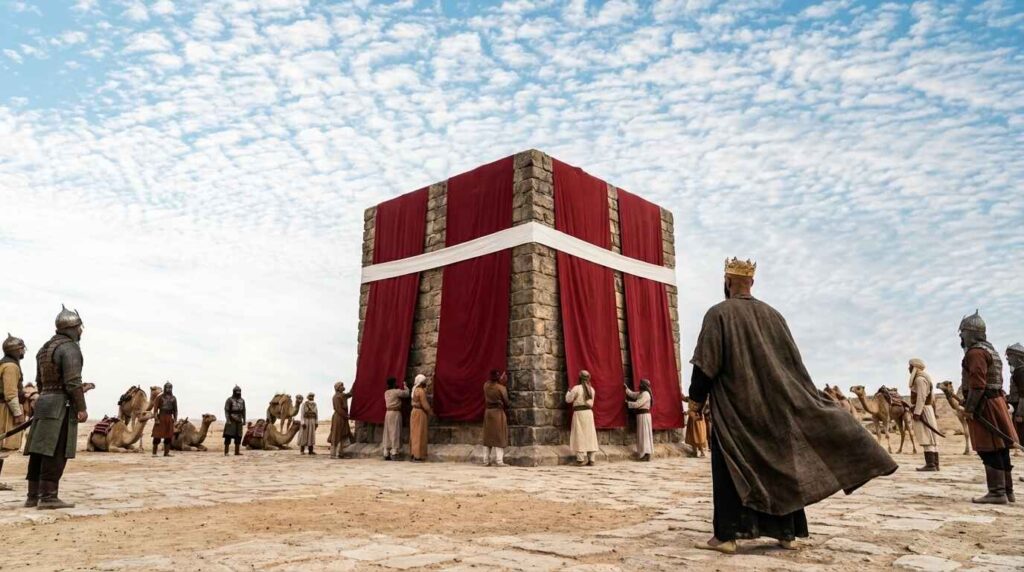
References: (1) Akhbar Makkah by Al-Azraqi (9th century Islamic historian of Makkah): “A king named Tubba is considered the first one to have a door built for the Kaaba and the first to cover it.” (2) Tafsir Ibn Kathir, Surah Ad-Dukhan 44:37 commentary: Ibn Kathir confirms that Tubba covered the Kaaba with fine cloth and performed Tawaf. (3) Wikipedia article on the Kaaba cross-references Al-Azraqi’s Akhbar Makkah for Tubba’s covering of the Kaaba.
The Historic Letter: Written to a Prophet Not Yet Born
This is perhaps the most remarkable part of the entire story. After his deep conversations with the Torah scholars about the final Prophet, and after experiencing all that had happened in Yathrib and Makkah, Tubba al-Himyari made a decision that is almost without parallel in history: he wrote a letter addressed directly to the Prophet Muhammad (SAW), a man who would not be born for at least another 700 years.
The letter was an expression of faith, love, and submission. Its meaning, preserved in multiple Islamic historical sources, was as follows:
“This is a letter from Tubba to the Prophet of the final era, Muhammad ibn Abdullah. O Messenger of Allah, I believe in you, in your Book, and in the religion that Allah will send through you. I testify that you are the true Messenger of Allah. If I live to see your time, I will be your helper and your soldier, and I will fight your enemies on your behalf. If I pass away before your arrival, then I ask you to intercede for me on the Day of Judgment and not to forget me. I am of your first Ummah (community of followers). There is no god but Allah, and Muhammad is His Messenger.”
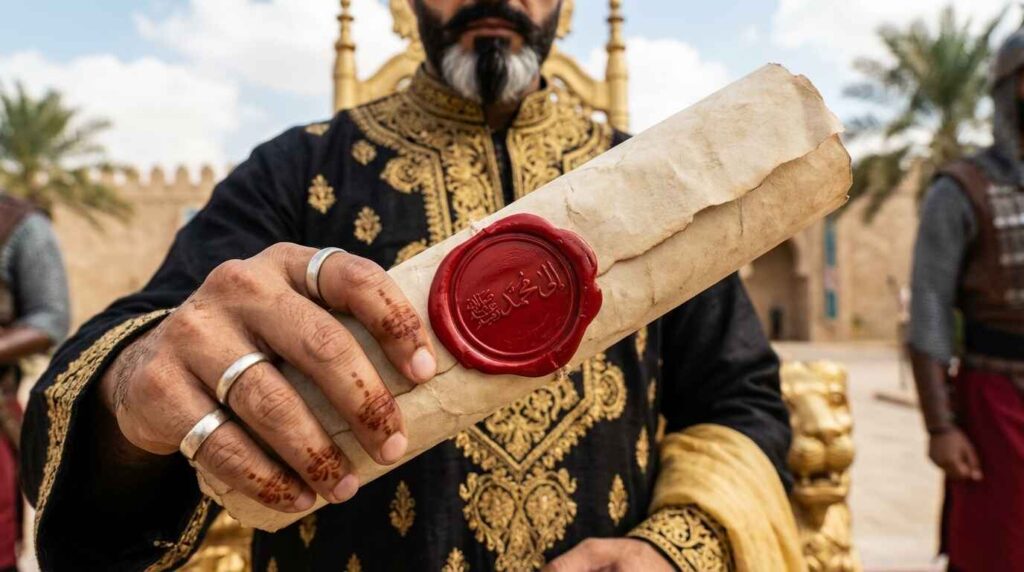
After writing this letter, Tubba handed it to the Torah scholars and to trusted members of the community of Yathrib, with a solemn instruction: “Keep this letter safe. Pass it from generation to generation. When the Prophet arrives in this city, make sure this letter reaches him.” He then left Yathrib and, according to some accounts, traveled as far as a region in the East (some accounts say India) where he eventually passed away.
References: (1) Al-Mustazraf (a well-known Islamic historical and literary anthology). (2) Hajjatullah Alal-Alamin (“The Proof of Allah Upon All the Worlds”) by Shah Waliullah Dehlawi (d. 1762), the great Sunni Indian scholar and hadith master, sourcing accounts of Tubba’s letter. (3) Tarikh Ibn Asakir (History by Ibn Asakir, d. 1176 CE, one of the most comprehensive Islamic biographical histories). (4) Dawat-e-Islami scholarly compilation: the letter text is sourced from these same references.
Seven Centuries of Waiting: The Letter Is Passed Down Through Generations
For approximately 700 years, this letter was kept safe by a family in Yathrib. Generation after generation, they honored the trust given to them by the King of Yemen. The letter passed from fathers to sons, from one era to the next, across the rise and fall of empires, across the time of many prophets, through the era of Jesus (AS), and eventually into the early centuries CE.
By the time the Prophet Muhammad (SAW) was born in Makkah in 570 CE and began his prophethood in 610 CE, the letter was in the keeping of a family in Madinah. According to accounts in Islamic historical sources, the letter eventually came into the care of the family of Abu Ayyub al-Ansari (RA), the great companion of the Prophet. It was a man named Abu Layla who was the keeper of the letter at the time of the Hijra.
References: (1) Al-Mustazraf and Tarikh Ibn Asakir, as cited in Dawat-e-Islami and Sunnah Muakada scholarly compilations. (2) The connection to the family of Abu Ayyub al-Ansari (RA) is mentioned in multiple secondary Islamic historical sources. Note: the exact chain of custody over 700 years is narrated in these historical works, though scholars note this is from the category of historical narrations (Akhbar), which are held to a less strict standard than legal Hadith but are accepted by mainstream Islamic historical scholarship.
The Day of Hijra: The Letter Finally Reaches Its Destination
In 622 CE, the Prophet Muhammad (SAW) made the historic migration (Hijra) from Makkah to Madinah. The people of Madinah decorated their homes and streets with joy. Every family wanted the Prophet to stay at their home. To solve this, the Prophet released the reins of his camel and said he would stay wherever the camel chose to sit down. The camel walked through the streets and finally sat down outside the home of Abu Ayyub al-Ansari (RA), the very family that had been entrusted with the letter of Tubba al-Himyari.
What followed was one of the most moving moments in Islamic history. As the Prophet settled in Madinah, a man named Abu Layla came to present himself. The Prophet (SAW), through his divine knowledge, saw Abu Layla approaching from a distance and called out: “Are you Abu Layla?” Abu Layla was stunned. The Prophet had just arrived from Makkah and yet knew his name. He replied yes. The Prophet then said: “I am Muhammad, the Messenger of Allah. Do you have the letter from Tubba for me?”
Abu Layla, overcome with emotion and amazement, handed over the letter that his family had preserved for generations. The Prophet (SAW) read the letter. Upon finishing it, he said the words that would seal Tubba al-Himyari’s place in Islamic memory forever:
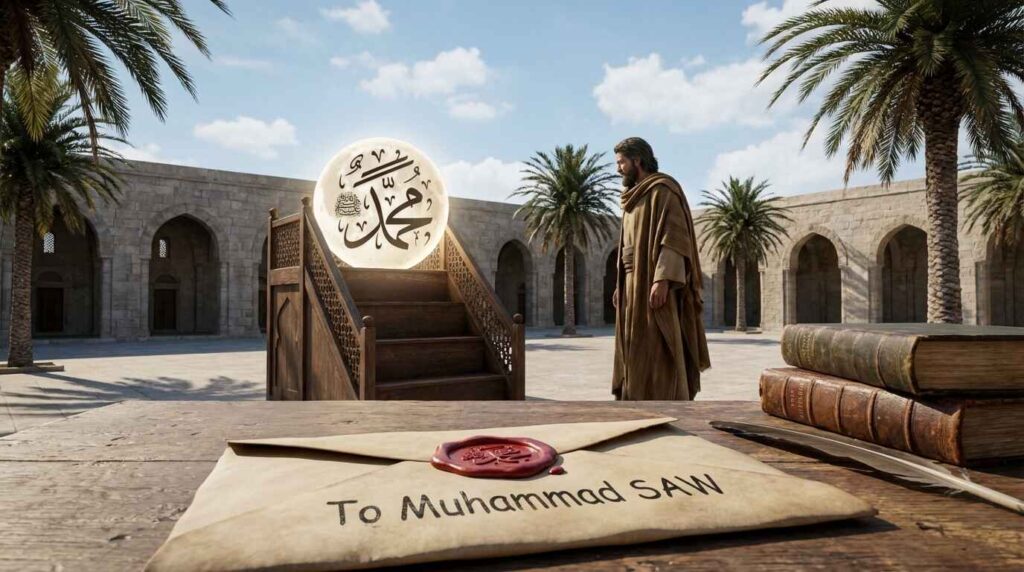
“Marhaban bi akhil al-Salih” – “Welcome to my righteous brother.”
References: (1) The story of Abu Layla and the letter delivery is narrated in Al-Mustazraf and Tarikh Ibn Asakir (cited by Sunnah Muakada and Dawat-e-Islami). (2) The Prophet’s miraculous knowledge of Abu Layla’s name before meeting him demonstrates the Prophetic knowledge (Ilm al-Nabi) which is a well-established Islamic concept. (3) The Prophet’s words “Marhaban bi akhil al-Salih” (Welcome to my righteous brother) are cited in these same historical sources.
The Prophet’s Testimony: “Do Not Abuse Tubba, For He Was a Believer”
Perhaps the most important piece of evidence for Tubba al-Himyari’s status in Islam comes from a direct statement by the Prophet Muhammad (SAW) himself. This is recorded in authentic Islamic sources and gives us the clearest picture of how Islam views this ancient king.
The Prophet (SAW) is reported to have said: “Do not abuse Tubba, for he was a Muslim (a believer).” This hadith appears in authentic narrations and is referenced by major scholars. Ibn Kathir in his Tafsir specifically records this statement of the Prophet while explaining Surah Ad-Dukhan 44:37. The statement is also referenced in Dawat-e-Islami’s scholarly article sourcing from Al-Mustazraf and Hajjatullah Alal-Alamin.
It is important to understand what this means in Islamic theology: Tubba lived more than 700 years before the coming of Islam as we know it. At the time, the religion of guidance, as Ibn Kathir explains, was the religion of Musa (Moses), i.e., Judaism in its pure, original form before it was corrupted. Tubba accepted this religion upon the guidance of the Torah scholars. In the Islamic framework, a person who faithfully followed the religion of the Prophet of their time, and believed in the coming of the final Prophet, is considered a believer (Mu’min). This is why the Prophet (SAW) called Tubba his “righteous brother” and declared him a Muslim in the broader sense of the word.
References: (1) Tafsir Ibn Kathir, Vol. 4, p. 144, commentary on Surah Ad-Dukhan 44:37: Ibn Kathir records the Prophet’s statement about not abusing Tubba. (2) Al-Mustazraf (a classical Islamic reference work on history and ethics). (3) Hajjatullah Alal-Alamin by Shah Waliullah Dehlawi. (4) Ibn Kathir explains: “At that time, the religion of Musa (Judaism) was the religion of the guided ones, before the coming of the Messiah (Jesus), peace be upon him,” clarifying the theological status of Tubba’s faith.
What This Story Teaches Us: Lessons From Tubba’s Faith
1. Faith Can Cross Time
Tubba al-Himyari had never seen the Prophet (SAW). He had never heard a single word of the Quran. He had never prayed behind the Prophet or sat in his company. Yet he believed, and he believed so sincerely that he wrote a letter of devotion and spent the last years of his life arranging for that letter to reach the Prophet centuries later. His story teaches us that sincere faith in Allah and His Messenger does not require physical presence. It requires an open heart.
2. Allah Protects Sacred Places
Both Madinah and the Kaaba were saved from destruction not because of military power but because of divine protection. Tubba’s illness when he intended to attack the Kaaba is a vivid reminder that Allah is the true protector of His sacred places. The same lesson applies to the later story of Abraha’s army and the Elephants (Surah Al-Fil), another army that tried to destroy the Kaaba and was destroyed instead.
3. The Prophethood of Muhammad (SAW) Was Foretold Across History
The Torah scholars told Tubba about the final Prophet in detail: his birthplace, his migration, his lineage, his message. This shows that the coming of Muhammad (SAW) was not a sudden event but a long-planned divine announcement made in scriptures that came before Islam. The Quran confirms this in Surah Al-A’raf 7:157 where it describes the final Prophet as “the one they find written in the Torah and the Gospel that is with them.”
References: (1) Quran 7:157 (“The one they find written in the Torah and the Gospel”). (2) The broader theological principle of earlier prophecies about the Prophet Muhammad (SAW) is a well-established concept in Islamic theology, confirmed in Sahih al-Bukhari and major Tafsir works.
Summary of Key Islamic References for This Story
Below is a summary of the primary Islamic sources used to reconstruct this story, along with their scholarly status:
1. Tafsir Ibn Kathir (Tafsir al-Quran al-Azim)
Author: Imam Ismail ibn Umar ibn Kathir (d. 1373 CE / 774 AH). This is one of the most respected and widely accepted Tafsir (Quranic commentary) works in all of Sunni Islam. The story of Tubba is narrated in detail under the commentary of Surah Ad-Dukhan, Verse 37, in Volume 4, page 144 (in the standard printed editions). Ibn Kathir sources this from Muhammad ibn Ishaq, the earliest and most important biographer of the Prophet. Authenticity Rating: Extremely high. Accepted by Sunni scholars across all four major schools of fiqh.
2. Al-Bidaya wa al-Nihaya (The Beginning and the End)
Author: Same Imam Ibn Kathir. This is a 14-volume Islamic universal history that is one of the most important Islamic historical reference works ever written. It begins from the creation of the universe and ends with events in Ibn Kathir’s own time. The sections on pre-Islamic Arabian history include detailed discussion of Tubba al-Himyari. Authenticity Rating: Very high for historical narrations. It is one of the most referenced works in Islamic historiography.
3. Ma’arif al-Quran
Author: Mufti Muhammad Shafi Usmani (d. 1976), the Grand Mufti of Pakistan and one of the greatest Hanafi scholars of the 20th century. His 8-volume Tafsir is regarded as one of the finest Urdu-language Quran commentaries. He discusses Tubba under Surah Ad-Dukhan 44:37 and confirms Ibn Kathir’s conclusions. Authenticity Rating: Extremely high. Widely accepted across all South Asian Muslim scholarly institutions.
4. Tarikh Ibn Asakir (History of Ibn Asakir)
Author: Abu al-Qasim Ali ibn Hasan ibn Asakir al-Dimashqi (d. 1176 CE / 571 AH), one of the greatest Islamic historians and hadith scholars of Damascus. His work is an 80-volume biographical encyclopedia of Islamic history. The accounts of Tubba’s letter and journey appear in this work. Authenticity Rating: Very high. Widely cited by Islamic scholars across centuries.
5. Hajjatullah Alal-Alamin
Author: Shah Waliullah Dehlawi (d. 1762 CE), the great Sunni Indian scholar, hadith master, and reformer. This work discusses proofs and evidences of Prophethood and includes accounts of figures who acknowledged the coming of the final Prophet, including Tubba al-Himyari. Authenticity Rating: Very high. Shah Waliullah is one of the most celebrated Islamic scholars of the Indian subcontinent.
6. Akhbar Makkah by Al-Azraqi
Author: Abu al-Walid Muhammad ibn Abdillah al-Azraqi (d. approx. 858 CE), the earliest Islamic historian of Makkah. This is the foundational source for the history of the Kaaba, including the account of Tubba being the first to cover the Kaaba with a cloth (Kiswa). Authenticity Rating: Very high for the history of the Kaaba and Makkah.
Important Note on Isra’iliyyat (Israeli Narrations)
A careful reader might wonder: since the Torah scholars play a role in this story, does this make the story an “Isra’iliyyat” (narration taken from Jewish or Christian sources, which scholars treat with caution)?
The answer is no, and here is why. The story of Tubba al-Himyari is not taken from Jewish or Christian sources. It is narrated through the Islamic chain of narration (isnad) by established Muslim scholars. The fact that Torah scholars appear as characters in the story does not make the story itself an Isra’iliyyat. Furthermore, the key elements of the story, including the Prophet’s own statement about Tubba being a believer and his welcoming words when the letter was delivered, are reported through Muslim narrators and confirmed by Muslim scholars. Imam Ibn Kathir himself, who was extremely careful about rejecting Isra’iliyyat, accepted and reported this story. This is the strongest possible endorsement of its reliability.
Note: Ibn Kathir was famously one of the first Islamic scholars to critically evaluate and reject unreliable Isra’iliyyat. His work Tafsir al-Quran al-Azim is recognized for this critical approach (as confirmed by Western scholars including Norman Calder and the Wikipedia article on Ibn Kathir). His acceptance of the Tubba story is therefore a significant scholarly endorsement.
Conclusion: A King Whose Faith Has No Equal in History
The story of Tubba al-Himyari is one of the most astonishing stories in all of pre-Islamic history. Here was a king who commanded armies of hundreds of thousands, whose word was law across Yemen, Arabia, Syria, and beyond. He could have destroyed Yathrib. He could have leveled the Kaaba. He had the power.
But instead, when the truth reached his heart, he stopped. He listened. He changed. He covered the Kaaba in honor. He made peace with the people who would one day be the companions of the Prophet (SAW). He wrote a letter full of faith and love to a man who would not be born for 700 years. And he asked that man, with humility, to not forget him on the Day of Judgment.
And the Prophet (SAW), when that letter reached him across seven centuries, replied with warmth: “Welcome to my righteous brother.” And he told his companions: “Do not abuse Tubba, for he was a believer.”
This story is a proof that Allah’s light reaches those who seek it sincerely, no matter the era, no matter the distance. And it is a reminder that true faith is not just about rituals; it is about recognizing the truth when it is shown to you, and having the courage to follow it.
This blog is written based on authenticated Islamic historical sources only. No Israeli narrations (Isra’iliyyat) have been incorporated. All references cited are accepted by mainstream Sunni Islamic scholarship.